
CASHEW NUT SHELL OIL

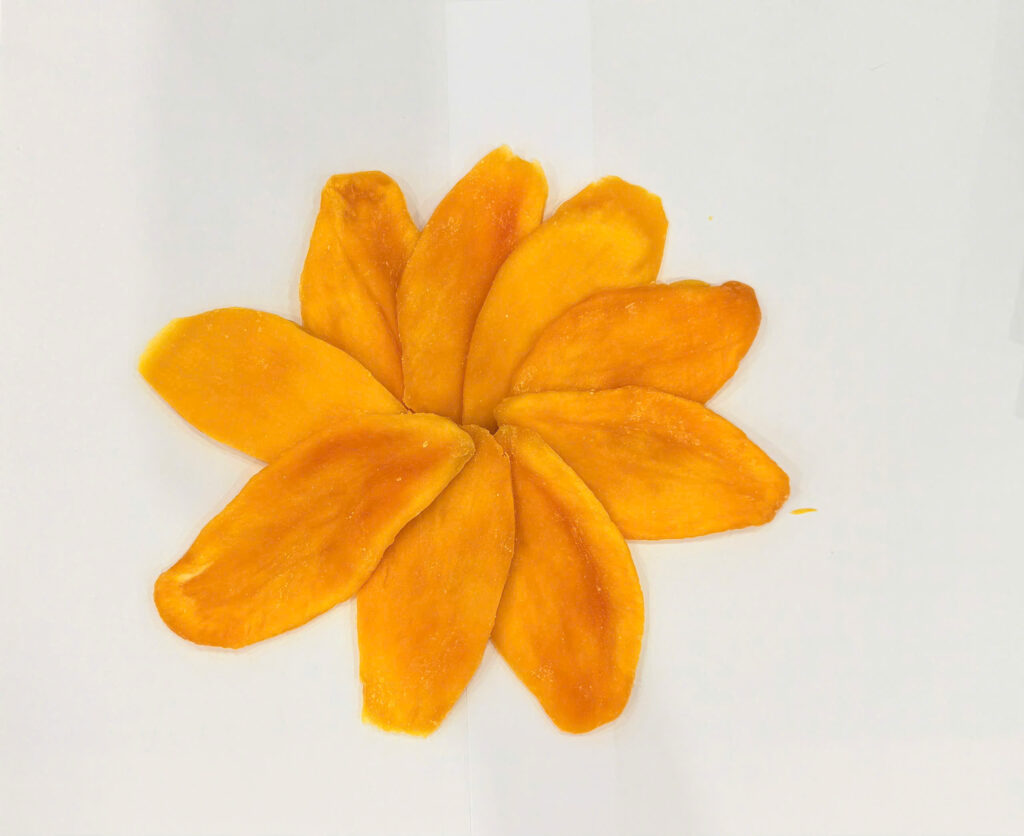
Sun-dried vs machine-dried mango is a common comparison for buyers, snack brands, and consumers who want to understand how drying methods may influence the final product.
Both methods have the same basic goal: remove enough moisture from fresh mango to create a more stable dried fruit product. However, they differ in how temperature, airflow, humidity, time, and exposure to the environment are controlled.
These differences can affect flavor concentration, color, texture, piece-to-piece consistency, and overall appearance.
The important point is that neither method is automatically “better” or “tastier.” The final sensory result depends on the mango variety, fruit maturity, slice thickness, drying conditions, formulation, and storage.
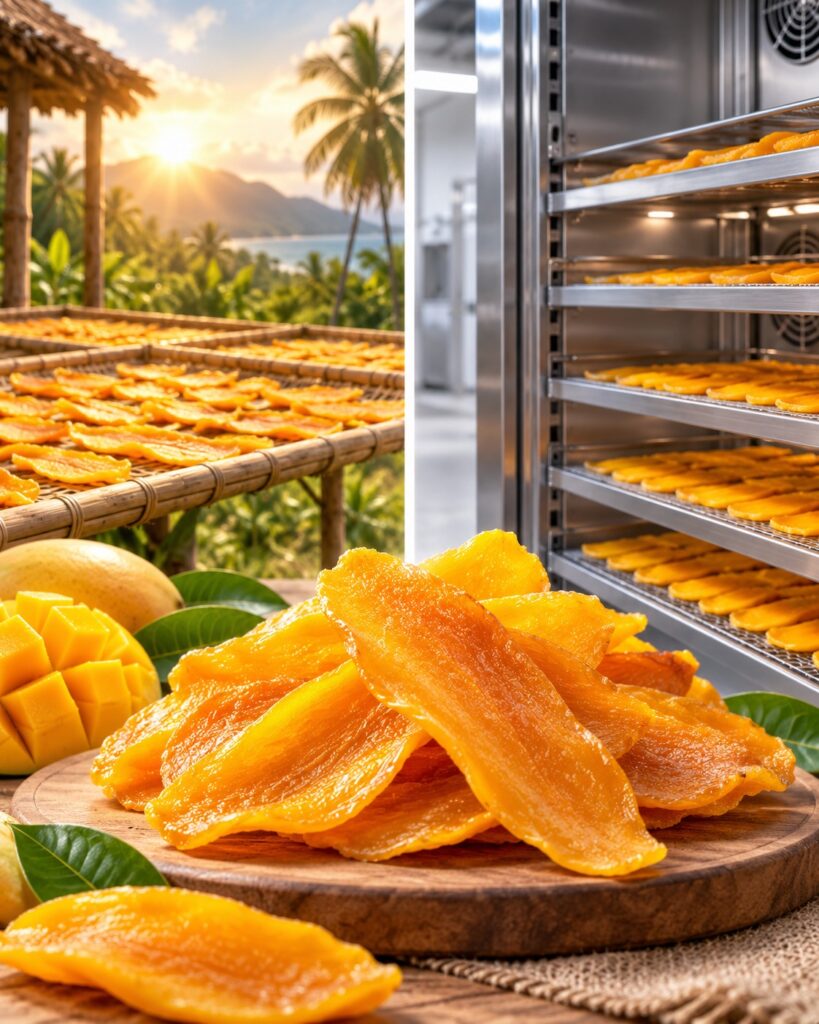
Sun drying is one of the oldest food preservation methods.
In simple terms, prepared mango pieces are exposed to natural heat and airflow so moisture gradually leaves the fruit.
Traditional sun drying can involve:
The exact conditions depend heavily on local weather.
Because natural conditions can vary throughout the day, sun drying is generally less controlled than industrial mechanical drying.
However, it can produce a distinctive dried-fruit character, especially when the drying process is carefully managed.
Machine drying uses controlled equipment to remove moisture from mango.
Depending on the production setup, processors may control:
The purpose is to create a more predictable environment.
For commercial soft dried mango, this type of control can be useful because buyers often require consistent moisture, texture, color, and shelf-life performance from one batch to another.
Machine drying does not mean the product is automatically more processed in a negative sense. It simply means the drying environment is controlled through equipment rather than relying primarily on natural outdoor conditions.
Yes, the drying method can influence flavor, but the difference is not determined by the method alone.
During drying, water leaves the mango and its natural sugars, acids, and aromatic compounds become more concentrated.
This can make the fruit taste more intense than fresh mango.
With sun drying, the process may take longer and involve broader temperature fluctuations. This can create different flavor development compared with a controlled machine-drying system.
Machine drying may allow processors to manage heat exposure more consistently.
Depending on the conditions, this can help preserve a recognizable mango flavor while reducing excessive heat exposure.
However, it would be inaccurate to say that one method always produces a better flavor.
The final taste also depends strongly on:
Temperature is one of the most important factors in the sun-dried vs machine-dried mango comparison.
Heat helps remove water, but it can also affect aroma and flavor compounds.
Higher temperatures may accelerate drying, but excessive heat can alter fruit aroma or create stronger cooked notes.
Lower temperatures may preserve certain fresh-fruit characteristics better, but they may require longer drying times.
Sun drying naturally experiences temperature changes throughout the day.
Machine drying can provide a narrower and more controlled temperature range.
For commercial manufacturers, this control can help reduce variability.
Color is another visible difference buyers often notice.
Fresh ripe mango typically has a yellow to orange color.
During drying, color can change because of:
Sun-dried mango may show greater natural variation because different pieces can receive different levels of heat and sunlight exposure.
Machine-dried mango can often achieve more uniform drying conditions, which may support more consistent color across a batch.
However, color consistency still depends on the raw mango.
Even within the same variety, fruit maturity can create noticeable differences.
Texture is especially important for soft dried mango.
The final texture depends on how much moisture remains in the fruit and how evenly that moisture is distributed.
A good soft dried mango product may be:
Sun drying may create more variation between pieces because external conditions are less uniform.
Some pieces may dry faster than others depending on their position, thickness, and exposure.
Machine drying allows producers to control temperature and airflow more consistently, which can help achieve a more repeatable texture.
Still, machine drying alone does not guarantee perfect texture.
The processor must also control:
Moisture is a key technical parameter in sun-dried vs machine-dried mango.
If too much moisture remains, the mango may become:
If too much moisture is removed, the mango may become:
For commercial buyers, consistency matters more than simply having a high or low moisture level.
Machine drying can make it easier to target a defined moisture range because the environment can be controlled.
Sun drying can also produce acceptable products, but it may require more manual monitoring and adjustment.
Sun drying may expose food to the surrounding environment more directly.
Depending on the system, this can include exposure to:
Modern sun-drying systems may use protective covers, enclosed solar dryers, or other controls to reduce these risks.
Machine drying usually takes place in a more enclosed processing environment.
For food manufacturers supplying export markets, controlled handling and hygiene are important regardless of the drying method.
The relevant question is not simply whether mango is sun-dried or machine-dried, but how well the overall process is managed.
This is a common marketing assumption.
Sun drying may sound more traditional or natural because it uses environmental heat.
However, the word “natural” can have different meanings in different markets and regulatory contexts.
A machine-dried mango can still have a simple ingredient list.
Likewise, a sun-dried product may contain added sugar, preservatives, or other ingredients depending on the formulation.
Therefore, buyers should review the actual ingredient declaration rather than judge the product only by the drying method.
In general, controlled drying systems can provide better process repeatability.
This is because manufacturers can manage key variables such as:
This can help reduce variation between batches.
For B2B buyers, consistency is especially important because they may need the product to meet the same specification over repeated shipments.
A retailer expects similar color and texture in every pack.
A food manufacturer expects ingredients to behave consistently during production.
This is one reason machine drying is widely used for commercial soft dried mango.
There is no universal answer.
Some buyers may prefer the more traditional character associated with slower sun drying.
Others may prefer the cleaner, more consistent sensory profile that can result from controlled machine drying.
The final choice depends on the target product.
For example, a premium traditional dried fruit line may value one type of flavor profile.
A large retail brand may prioritize consistency, appearance, and predictable texture.
Both approaches can be valid.
The most reliable way to decide is to evaluate actual samples.
When comparing sun-dried vs machine-dried mango, buyers should review more than taste alone.
Useful evaluation points include:
For commercial orders, technical documents can also be useful.
These may include:
If moisture or texture is critical, buyers may also want to agree on acceptable tolerances before production.
Even well-dried mango can change after production if the packaging does not protect it properly.
Soft dried mango can gain or lose moisture depending on the surrounding environment.
This can affect:
For export shipments, packaging should be suitable for long-distance transportation and storage.
This is particularly important in humid climates.
Therefore, buyers should evaluate the drying method together with packaging quality rather than treating them as separate issues.
Private-label brands may choose either method depending on their desired positioning.
A buyer focused on traditional processing may prefer a sun-dried concept.
A buyer focused on consistency and large-scale supply may prefer controlled machine drying.
Other project requirements may include:
The drying method is only one part of the final product specification.
Even the most advanced drying system cannot fully compensate for poor raw material.
Fresh mango quality affects:
A well-ripened, suitable mango variety can produce very different results from fruit harvested at the wrong stage.
For this reason, manufacturers need to manage both raw-material selection and drying conditions.
The final product is the result of the entire process, not just the dryer.
The sun-dried vs machine-dried mango comparison shows that drying method can influence the final product.
Sun drying relies more heavily on natural heat and environmental conditions.
Machine drying allows manufacturers to control temperature, airflow, time, and humidity more precisely.
These differences may affect:
But neither method is automatically superior.
The best choice depends on the target market, desired sensory profile, production scale, and product specification.
For buyers, the most practical approach is to compare representative samples and review technical specifications before making a sourcing decision.
Abimex Group supplies Vietnamese soft dried mango for international importers, distributors, retailers, food manufacturers, and private-label projects.
Different mango cuts, formulations, texture requirements, and packaging options can be discussed based on buyer needs and product availability.
Buyers can request product specifications, representative samples, available technical documentation, and quotations for evaluation.