CASHEW NUT SHELL OIL

CASHEW NUT SHELL OIL
RICE PROTEIN POWDER
RICE PROTEIN POWDER
DESICCATED COCONUT
Crispy jackfruit chips are becoming an increasingly interesting product for snack brands, distributors, importers, and retailers looking to expand their plant-based snack portfolios. With their recognizable tropical origin, golden appearance, crunchy texture, and convenient ready-to-eat format, jackfruit chips fit naturally into several trends shaping today’s international snack market.
Consumers are increasingly exploring snacks made from fruits, vegetables, legumes, grains, and other plant-derived ingredients. At the same time, buyers are looking for products that stand out from conventional potato chips and familiar dried fruits.
This creates an opportunity for tropical fruit snacks such as crispy jackfruit.
But why are crispy jackfruit chips attracting more attention, and what should B2B buyers consider when evaluating this product?
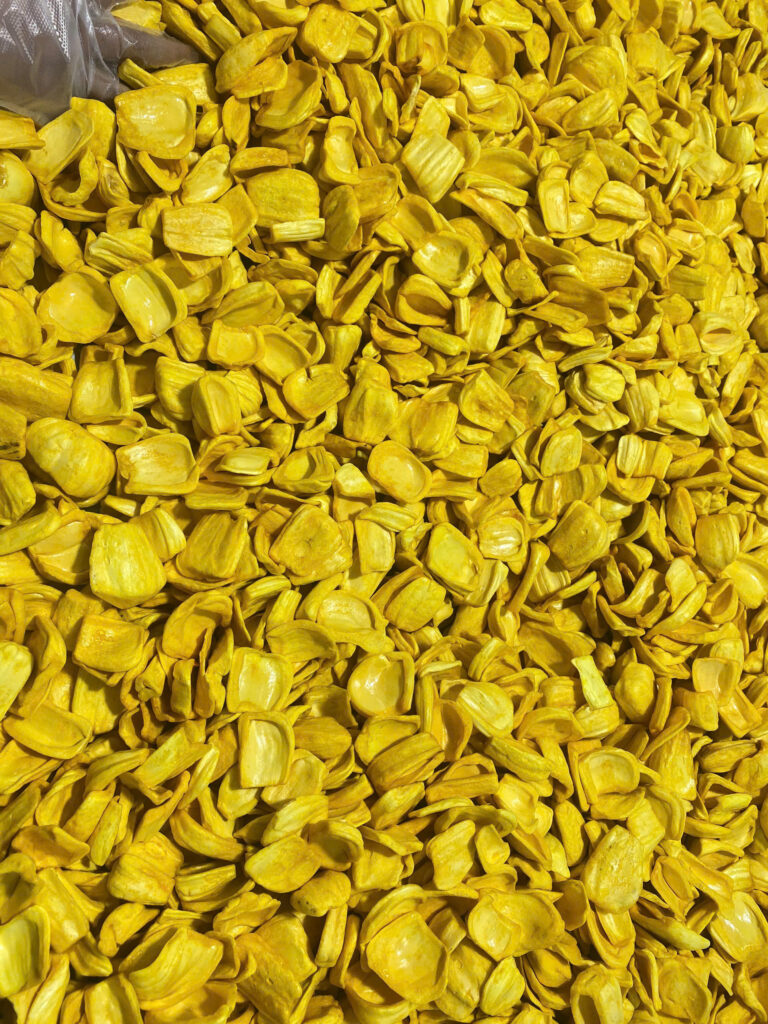
Table of Contents
ToggleOne of the biggest reasons behind growing interest in jackfruit chips is the broader development of plant-based food.
Plant-based consumption today is not limited to people following strict vegan diets. Many consumers simply want more variety in the types of plant-derived foods they purchase.
This has encouraged snack manufacturers and retailers to introduce products made from:
Crispy jackfruit chips fit comfortably within this category because jackfruit itself is a fruit-based raw material and can be developed into an easy-to-understand snack format.
For brands, this creates an opportunity to position jackfruit chips alongside other tropical and fruit-based snacks without relying on complicated product concepts.
Snack shelves in many markets already contain familiar products such as potato chips, banana chips, apple chips, coconut chips, and dried mango.
Jackfruit offers a different sensory experience.
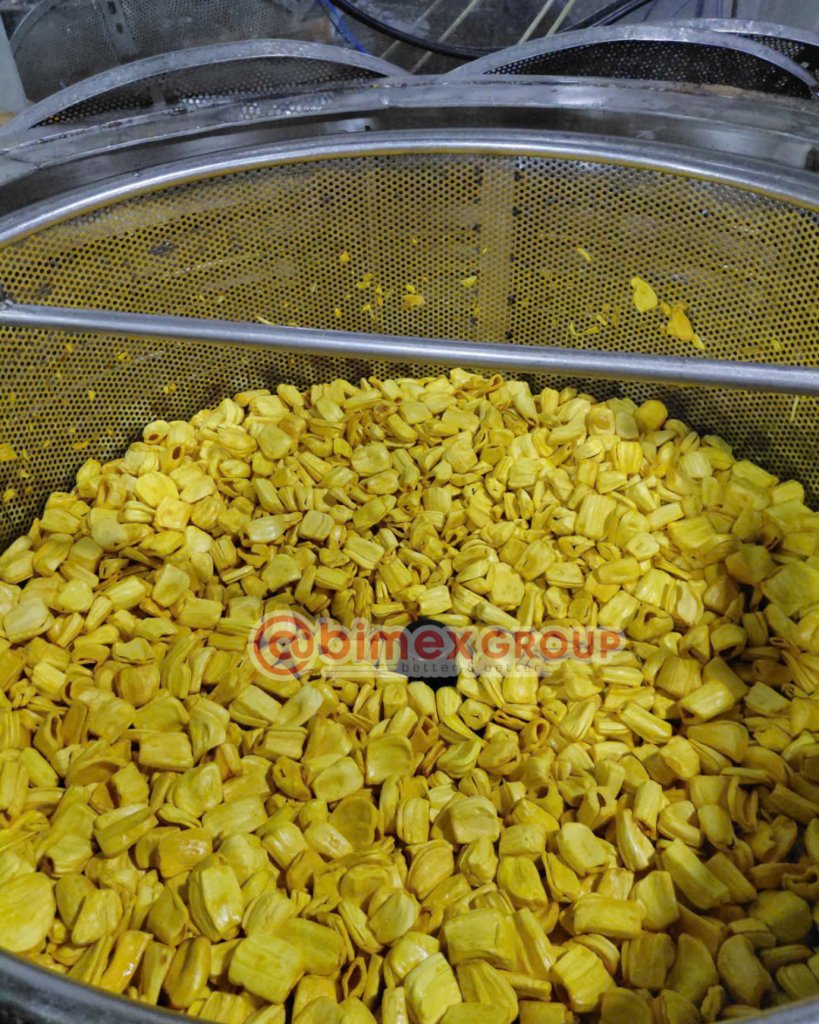
The fruit has a distinctive structure, natural yellow color, and recognizable tropical character. When processed into crispy chips, the individual jackfruit pieces can retain a shape that is noticeably different from conventional thin-cut potato or vegetable chips.
This visual difference can be valuable in retail environments where packaging often needs to communicate the product quickly.
When consumers open a bag of crispy jackfruit chips, they can immediately recognize that they are eating a fruit snack rather than a standard sliced chip.
For retailers and brands, product differentiation is important in crowded snack categories.
Texture is one of the key factors that determines whether a snack feels satisfying and distinctive.
Fresh jackfruit has a completely different texture from fried jackfruit chips.
During processing, moisture is removed from the fruit until the pieces develop a dry and crisp structure.
The result is a snack that combines recognizable jackfruit shapes with a crunchy eating experience.
Good-quality crispy jackfruit chips should typically have a consistent crunch rather than feeling excessively soft or chewy.
Texture can be influenced by factors such as:
This means buyers should evaluate actual product samples rather than relying only on pictures or specifications.
Many commercial jackfruit chips are produced using vacuum-frying technology.
Vacuum frying takes place under reduced pressure, which allows moisture to be removed at lower temperatures than conventional atmospheric deep frying.
For fruit snacks, this type of process can help manufacturers achieve characteristics such as:
The exact result depends on the production system and raw material.
It is important, however, not to interpret “vacuum-fried” automatically as a nutritional or health claim.
Vacuum frying is first of all a processing technology.
Any comparison relating to calories, total fat, saturated fat, or other nutritional characteristics should be based on laboratory or nutrition data from the specific products being compared.
For crispy jackfruit chips, the strongest marketing message is often the sensory experience: tropical fruit, distinctive flavor, attractive color, and crunch.
International snack markets continue to explore flavors and ingredients associated with different regions.
Mango, coconut, banana, pineapple, dragon fruit, and jackfruit are all examples of tropical ingredients used in snack development.
Among them, jackfruit remains less familiar in some markets.
That unfamiliarity can actually create an advantage.
Consumers who already know mango and banana snacks may be interested in trying something different.
For retailers, crispy jackfruit chips can therefore serve as a product that adds variety to a tropical snack selection.
They can also be combined with other fruit products in:
The product does not need to replace conventional snacks. Instead, it can complement an existing assortment.
Convenience remains fundamental to the snack industry.
Consumers generally expect packaged snacks to be easy to carry, store, open, and consume.
Jackfruit chips require no preparation after packaging.
They can be eaten directly from the bag and are suitable for many everyday situations, including:
This ready-to-eat format makes crispy jackfruit chips easier to commercialize than fresh jackfruit in markets where the whole fruit may be unfamiliar, difficult to handle, or not consistently available.
A shelf-stable packaged product also gives distributors greater flexibility in transportation and inventory management compared with fresh fruit.
Another advantage of fruit chips is that consumers can understand the basic product concept quickly.
Jackfruit → processed into crispy pieces → packed as a ready-to-eat snack.
This type of straightforward positioning can be useful for brands that want clear product communication.
However, buyers should still check the actual ingredient list.
Commercial crispy jackfruit chips may contain ingredients such as:
Not every product has the same recipe.
Therefore, terms such as “natural,” “clean label,” “no added sugar,” or similar marketing descriptions should only be used when they accurately reflect the specific formulation and comply with the regulations of the destination market.
Jackfruit itself is plant-derived, making jackfruit snacks relevant to vegan and plant-based product ranges when all ingredients and processing inputs meet the intended product claim.
However, commercial buyers should not simply assume that every product can automatically carry a vegan claim.
For private-label products, buyers may need to review:
Once these points have been verified, crispy jackfruit chips can potentially be positioned across several retail categories rather than only traditional dried-fruit shelves.
These may include vegan snacks, plant-based products, Asian foods, tropical snacks, premium foods, or general snack categories.
The rise of private-label food products gives importers and retailers another reason to consider jackfruit chips.
Rather than selling only under a manufacturer’s brand, buyers may develop their own packaging and market positioning.
Private-label crispy jackfruit chips can be customized in areas such as:
The level of customization available depends on the manufacturer, order volume, packaging supplier, and production setup.
One practical issue buyers should consider is packaging MOQ.
Custom-printed packaging often requires minimum production quantities that may be significantly higher than the initial quantity a new snack brand wants to order.
This should be discussed early in a private-label project to avoid unexpected packaging costs.
Producing a crispy product is only half of the challenge.
The texture must also survive transportation and storage.
Fruit chips can absorb moisture from the surrounding environment if packaging does not provide an adequate barrier.
When this happens, the chips may gradually lose their desired crunch.
For crispy jackfruit chips, packaging therefore plays an important role in protecting:
Buyers should evaluate packaging materials, seal integrity, bag size, carton configuration, and intended shelf life.
This becomes especially important for export shipments involving long transit times and changing temperature or humidity conditions.
Growing market interest does not mean buyers should select a product based only on appearance.
Before confirming a commercial order for crispy jackfruit chips, importers should evaluate several technical and commercial factors.
Important points include:
A representative sample is particularly useful.
A good sample does not guarantee that every future shipment will be identical, but it gives buyer and supplier a reference point when agreeing on commercial specifications.
When a brand first tests crispy jackfruit chips, product approval may initially be based on taste and appearance.
As orders increase, subjective approval is usually not enough.
Buyers and suppliers should agree on measurable quality criteria where possible.
For example:
Jackfruit is an agricultural raw material, so some natural variation should be expected.
Clear tolerances can help both parties distinguish normal agricultural variation from actual quality problems.
One reason crispy jackfruit chips are interesting for product developers is that they sit at the intersection of several market themes.
They are:
Fruit-based – made primarily from a recognizable tropical fruit.
Plant-oriented – suitable for the broader movement toward plant-based product exploration when formulation requirements are met.
Convenient – ready to eat directly from the package.
Distinctive – less conventional than many established chip categories.
Export-friendly – available as a packaged shelf-stable snack when properly processed and packed.
Private-label compatible – potentially suitable for brands developing their own tropical snack portfolios.
None of these factors guarantees commercial success.
Consumer preferences, price, packaging, distribution, competition, and brand positioning still matter.
But together they explain why more B2B buyers are considering jackfruit chips as an addition to their snack ranges.
This is a claim that should be handled carefully.
A fruit-based origin does not automatically establish that a processed snack is healthier than another product.
Actual nutritional characteristics can vary according to:
Therefore, brands should avoid broad statements such as “healthier than potato chips” unless the comparison is supported by appropriate nutritional data and complies with relevant regulations.
A more reliable approach is to focus on what can be objectively described about crispy jackfruit chips: the fruit source, processing method, crunchy texture, tropical flavor, ingredient formulation, and product format.
Vietnam has a strong agricultural base for tropical fruits, including jackfruit.
The combination of local raw-material availability and food-processing capacity has allowed Vietnamese manufacturers to supply processed tropical fruit products to international markets.
For overseas buyers, sourcing from Vietnam may provide access to:
However, buyers should still assess each manufacturer individually.
Factory certifications, quality systems, production capability, specifications, and export experience can vary between suppliers.
Crispy jackfruit chips combine several characteristics that make them relevant to today’s evolving snack market: a plant-derived tropical ingredient, distinctive golden appearance, crunchy texture, convenient format, and flexibility for retail or private-label development.
Their growing appeal should not be reduced to unsupported health claims.
Instead, the strongest case for jackfruit chips comes from the product itself: an unusual tropical fruit transformed into a recognizable and convenient crispy snack.
For importers, retailers, and snack brands, the opportunity lies in selecting consistent quality, appropriate packaging, clear product specifications, and positioning that fits the target consumer.
As consumers continue exploring new plant-based and tropical snack experiences, crispy jackfruit chips are well positioned to earn more space on international snack shelves.
Abimex Group supplies Vietnamese crispy jackfruit chips for international importers, distributors, retailers, and snack brands.
We can support bulk orders as well as OEM and private-label projects, depending on product specifications, order quantities, and packaging requirements.
Buyers can request product specifications, samples, available quality documentation, packaging information, and quotations for evaluation.