CASHEW NUT SHELL OIL

CASHEW NUT SHELL OIL
RICE PROTEIN POWDER
RICE PROTEIN POWDER
DESICCATED COCONUT
Vacuum-fried jackfruit chips and conventional deep-fried jackfruit chips may look similar at first glance, but the production technologies behind them are significantly different. For snack brands, importers, distributors, and food manufacturers, understanding these differences can help determine which processing method better matches their desired product characteristics.
The key differences are not simply about whether one product is “better” than another. Instead, they involve frying pressure, processing temperature, oil behavior, color retention, flavor development, texture, and manufacturing requirements.
So, what really happens during vacuum frying compared with conventional deep frying?
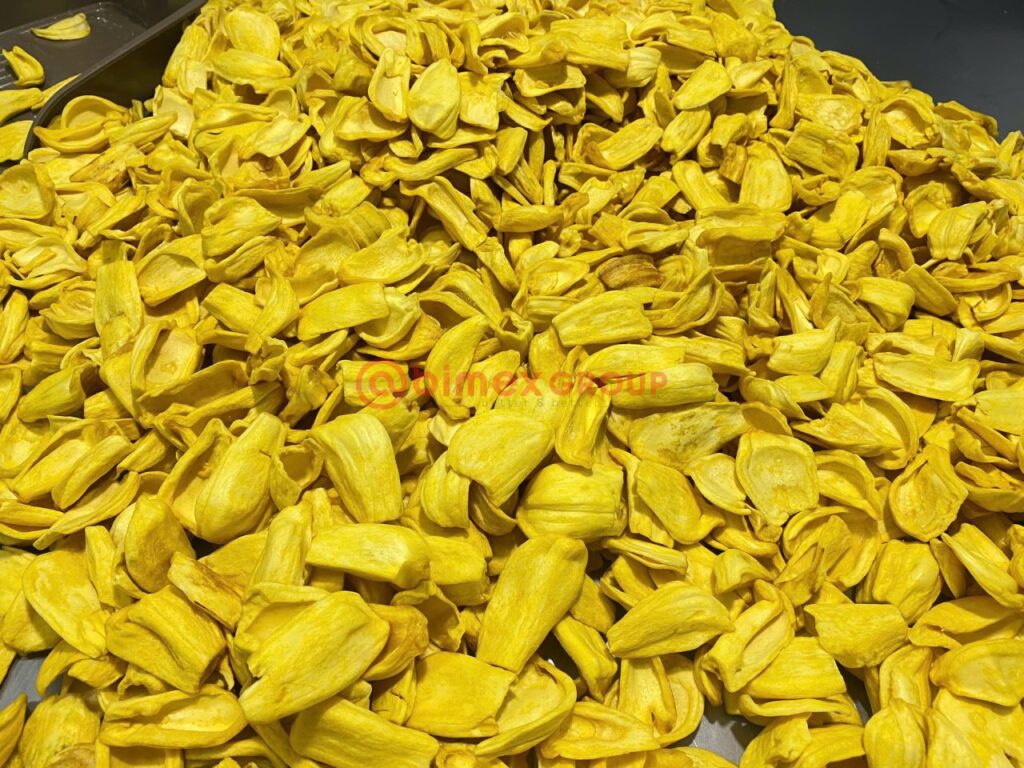
Table of Contents
ToggleVacuum-fried jackfruit chips are produced by frying prepared jackfruit pieces inside equipment where the air pressure is reduced below normal atmospheric pressure.
Reducing the pressure also lowers the boiling point of water inside the fruit. As a result, moisture can be removed at a lower frying temperature than would generally be required under normal atmospheric frying conditions.
During processing, fresh or prepared jackfruit pieces are placed inside a vacuum frying system containing cooking oil. The combination of reduced pressure and controlled heating removes moisture from the fruit while creating the crispy texture associated with jackfruit chips.
After frying, manufacturers may also use oil-removal or centrifuging equipment to remove excess surface oil before cooling and packaging.
The exact processing parameters vary depending on the equipment, jackfruit variety, fruit maturity, slice thickness, target moisture level, and desired texture.
Traditional deep frying takes place under normal atmospheric pressure.
Jackfruit slices are submerged in heated oil, where the high temperature causes moisture inside the fruit to evaporate rapidly. As moisture leaves the product, the structure becomes progressively drier and crispier.
This is a widely used food-processing method because it is relatively straightforward and suitable for many snack products.
However, conventional deep frying generally operates at a higher temperature than vacuum frying.
Higher-temperature processing can influence several characteristics of the finished jackfruit chips, including:
These effects are not necessarily negative. In some snack applications, stronger roasted or fried notes may actually be desirable.
One of the most important differences between the two technologies is processing temperature.
Because frying takes place under reduced pressure, water can evaporate from jackfruit at a lower temperature.
This allows vacuum-fried jackfruit chips to develop a crispy texture without exposing the fruit to the same temperature conditions commonly associated with conventional atmospheric frying.
Lower processing temperatures can also reduce the intensity of some heat-driven changes in the fruit.
Traditional frying takes place at atmospheric pressure and generally requires higher oil temperatures to remove moisture efficiently.
Higher heat can promote more intensive browning reactions and stronger fried flavors.
For manufacturers, the choice depends on the target product.
If the goal is to preserve more of the fruit’s recognizable appearance and characteristic jackfruit flavor, vacuum frying can be particularly attractive.
Color is one of the easiest ways buyers may notice the difference between processing technologies.
Fresh ripe jackfruit naturally has an attractive yellow to golden-yellow appearance.
During high-temperature processing, pigments and other components in fruit can undergo changes that affect the final color.
Because vacuum-fried jackfruit chips are processed under reduced pressure and generally at lower temperatures, manufacturers can often achieve a finished product that remains closer to the natural yellow or golden appearance of jackfruit.
Traditional deep frying may lead to greater browning, depending on:
For retail snack brands where bright, natural-looking fruit pieces are an important part of product positioning, color can therefore be a major consideration when choosing a processing method.
Jackfruit has a distinctive tropical aroma and naturally sweet flavor.
Processing temperature can influence how much of this original flavor character remains noticeable after frying.
With vacuum-fried jackfruit chips, lower-temperature processing can help limit excessive heat-driven flavor changes. The finished chips may therefore retain more recognizable jackfruit characteristics.
Conventional deep frying, on the other hand, can create stronger roasted, caramelized, or fried flavor notes because of the higher processing temperature.
Neither flavor profile is universally preferable.
A snack manufacturer targeting a fruit-forward product may prefer a flavor profile that remains closer to jackfruit.
Another brand may intentionally prefer stronger fried notes.
The final result should therefore be evaluated through actual product samples rather than processing method alone.
Oil is another important consideration when comparing vacuum-fried jackfruit chips with conventional deep-fried products.
Both processes use frying oil, so it would be misleading to describe vacuum-fried jackfruit as “oil-free.”
Vacuum frying systems are often combined with processes designed to remove excess surface oil after frying, such as centrifugal oil removal.
However, the actual oil content of the finished product depends on multiple factors:
Therefore, buyers should not assume that a vacuum-fried product automatically has a specific fat or oil level.
If oil or fat content is important for purchasing specifications, the correct approach is to review the supplier’s nutrition data, specification sheet, or laboratory test results for the actual product.
Texture is one of the most important quality factors in jackfruit snacks.
Removing enough moisture is essential for producing the dry, crispy bite expected from jackfruit chips.
Under vacuum conditions, moisture can escape from the fruit at relatively low temperatures. When the process is properly controlled, the resulting chips can develop a light, crisp structure while maintaining the recognizable shape of the jackfruit flesh.
Several production variables influence crispness:
Even high-quality vacuum-fried jackfruit chips can lose crispness if exposed to humidity after processing.
Packaging is therefore just as important as frying technology.
This is where marketing claims require particular caution.
It is common to see vacuum-fried snacks described online as “healthier” simply because they are produced at lower temperatures.
However, processing technology alone is not enough to establish a health benefit.
A reliable comparison would require actual nutritional data from the specific products being evaluated, including factors such as:
Different manufacturers may use different oils, frying times, raw materials, and processing conditions.
Therefore, rather than claiming that vacuum-fried jackfruit chips are inherently healthier, it is more accurate to discuss their processing characteristics, such as lower-temperature frying and the ability to maintain particular color, flavor, and texture properties.
Any nutrition-related claims should be based on verified product-specific testing and comply with the regulations of the destination market.
Vacuum frying can be particularly suitable for fruit snacks because fruits contain natural sugars, pigments, flavors, and aromas that can be sensitive to intensive heat treatment.
For jackfruit chips, manufacturers may select vacuum frying when they want to achieve:
The process can help maintain an attractive yellow-to-golden appearance.
Lower-temperature processing can limit excessive development of strong fried notes.
Controlled moisture removal produces the crunchy texture required for snack applications.
Properly processed jackfruit pieces can maintain a recognizable fruit structure, which may improve product presentation.
These characteristics make vacuum-fried fruit snacks suitable for retail snack brands, tropical fruit assortments, snack mixes, private-label products, and foodservice applications.
Processing technology is important, but it should not be the only factor considered when sourcing jackfruit chips.
Before placing a commercial order, buyers should review:
Samples are particularly important.
Two suppliers may both offer vacuum-fried jackfruit chips, but differences in raw material, processing parameters, oil management, packaging, and quality control can create noticeably different finished products.
There is no universal answer.
Traditional deep frying can be efficient and suitable for products where stronger fried characteristics are acceptable or desirable.
Vacuum frying, meanwhile, provides food manufacturers with greater opportunities to process fruit at lower temperatures and develop chips that retain more of the recognizable appearance and flavor profile associated with the original fruit.
For buyers sourcing premium fruit snacks, vacuum-fried jackfruit chips can therefore be an interesting option when priorities include:
The most reliable way to compare products is to evaluate samples together with their technical specifications rather than relying solely on the name of the processing technology.
Abimex Group supplies Vietnamese vacuum-fried jackfruit chips for international importers, distributors, food manufacturers, and snack brands.
We can support bulk supply as well as OEM and private-label requirements, depending on order specifications.
When evaluating jackfruit chips, our team can provide product specifications, samples, packaging information, and export-related documentation to help buyers select the appropriate product for their market.