CASHEW NUT SHELL OIL

CASHEW NUT SHELL OIL
RICE PROTEIN POWDER
RICE PROTEIN POWDER
DESICCATED COCONUT
Tapioca-based cat litter is attracting growing interest from pet product distributors, retailers, and private-label brands looking for plant-based alternatives to conventional litter materials.
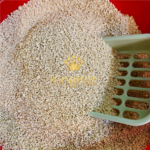
Made with tapioca or cassava-derived starch as an important functional component, this type of litter is designed to absorb moisture, form scoopable clumps, and support everyday odor management.
However, not all tapioca-based litters perform the same way.
Differences in formulation, particle size, density, processing method, packaging, and moisture control can significantly affect the final user experience.
For B2B buyers, choosing the right product therefore requires more than checking price and packaging design.
This guide explains the main factors importers and pet brands should evaluate before sourcing tapioca cat litter.
Table of Contents
ToggleTapioca is derived from cassava roots and is rich in starch.
Starch has the ability to interact with water, which makes it useful in cat litter formulations where liquid absorption and clumping are important.
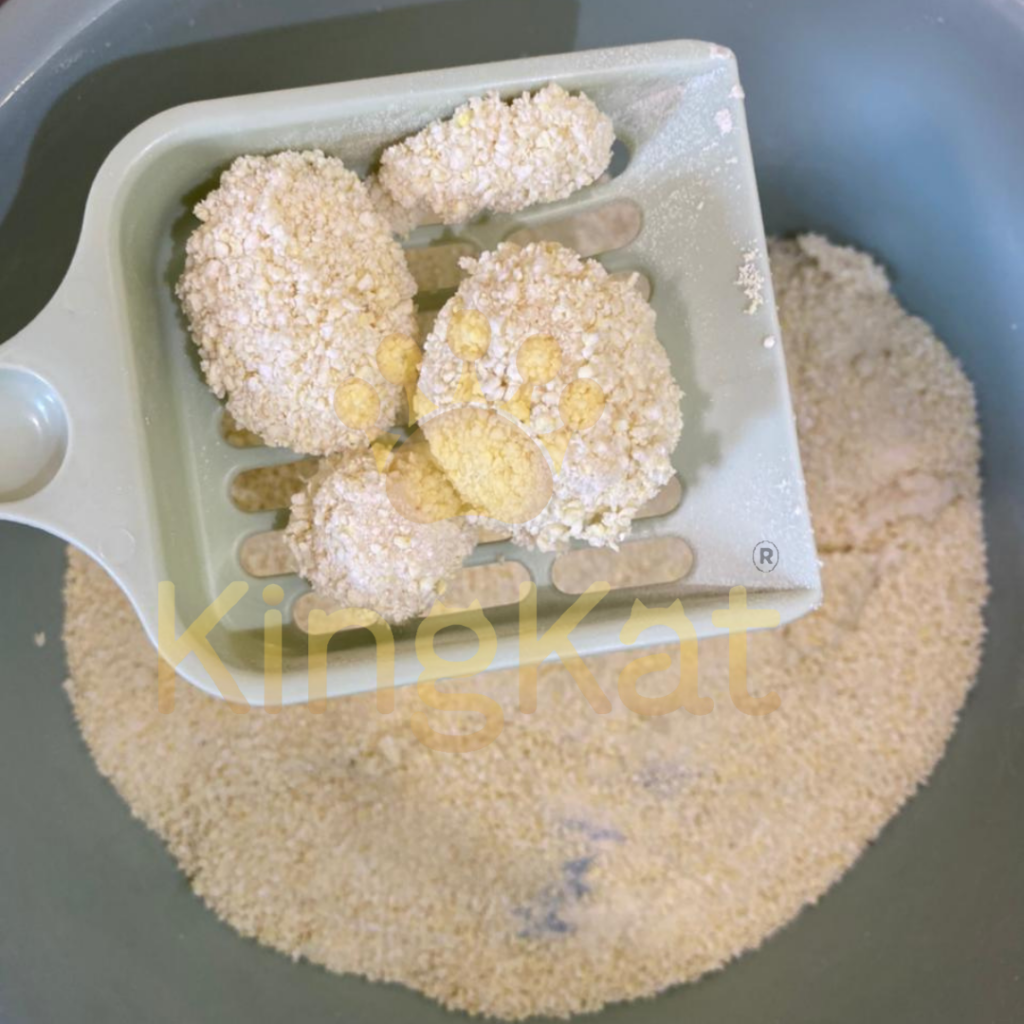
When tapioca-based cat litter comes into contact with moisture, the starch-rich particles can absorb liquid, swell, and bind together.
This helps create a clump that can be removed with a litter scoop.
Depending on the formulation, tapioca may be used alone or combined with other plant-based materials.
This means two products labeled “tapioca cat litter” may have different:
For buyers, the formulation and finished-product performance matter more than the category name alone.
Absorption is a key performance characteristic.
A good litter should be able to take up liquid efficiently without allowing excessive spreading across the tray.
However, absorption should not be evaluated using one number alone.
Performance can depend on:
Some suppliers may report absorption as a ratio, while others may use internal testing methods.
For meaningful comparison, buyers should ask how the result was measured.
A high absorption figure may look attractive, but without a clear test method, it is difficult to compare one supplier with another.
Fast clumping can help localize wet areas inside the litter tray.
When liquid spreads too far before the litter forms a clump, more clean litter may become contaminated.
This may lead to larger waste removal during scooping.
With tapioca-based cat litter, starch helps particles bind together after contact with moisture.
Buyers may evaluate:
Clumping speed should therefore be tested together with absorption.
Fast clumping is useful only if the resulting clump remains stable.
A weak clump may break apart during scooping.
This can leave contaminated particles behind in the tray and reduce user convenience.
Commercial buyers should test whether the clump:
A balanced formulation should ideally combine rapid moisture uptake with adequate clump strength.
This is why simply describing a litter as “super clumping” is not enough for professional sourcing.
Sample testing is essential.
Dust is another important consideration.
Excessive fine particles may be released when litter is:
Dust levels can be affected by particle hardness, manufacturing, packaging, and transportation.
A product may leave the factory in good condition but generate more fines if bags are compressed or handled roughly during shipping.
When evaluating tapioca-based cat litter, buyers should inspect both fresh samples and, where possible, commercially packed products.
Claims such as “dust-free” should be used carefully unless they are supported by an agreed testing method.
A safer description may be:
“Designed for low-dust performance.”
Tracking occurs when litter particles leave the tray on a cat’s paws.
Particle size and shape can influence this behavior.
Very small particles may be more likely to travel outside the litter box.
Larger particles may reduce some tracking but can feel different under a cat’s paws.
This creates a trade-off.
A manufacturer may need to balance:
There is no universal particle size that is best for every market.
Private-label buyers should therefore select granule characteristics based on their target product positioning.
Odor-control claims should be handled carefully.
Tapioca-based litter does not automatically eliminate all litter box odor.
Instead, odor management usually comes from several functions working together:
Some formulations may also contain fragrance or other odor-management ingredients.
However, fragrance and odor control are not the same thing.
A scented product may mask certain smells, while absorption and clumping help address the waste source itself.
Brands should avoid statements such as:
“100% odor elimination.”
Unless supported by appropriate testing.
A more responsible claim is:
“Helps manage litter box odor through moisture absorption and clumping.”
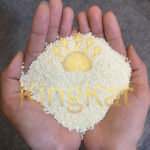
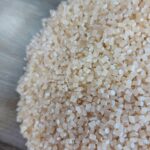
Particle size is not just a cosmetic characteristic.
It can influence:
Smaller particles may provide more surface area for liquid contact.
Larger particles may behave differently during handling.
Consistency is also important.
A bag containing a wide range of particle sizes may behave less predictably than a product with controlled granule distribution.
For B2B buyers, particle size should therefore be included in sample evaluation.
Because tapioca-based litter interacts strongly with moisture, the product needs to remain dry before use.
If it absorbs humidity during production, storage, or transport, the litter may:
This makes packaging particularly important.
The product should be packed in moisture-resistant materials appropriate for the intended logistics chain.
Packaging should not be treated only as a branding element.
For export shipments, it protects the litter from:
Common packaging options may include:
For retail applications, buyers may also request:
The most suitable structure depends on market requirements and shipment conditions.
Even a strong moisture-resistant bag can fail if the seal is poor.
Weak seals may allow:
Buyers should therefore evaluate seal consistency as part of packaging approval.
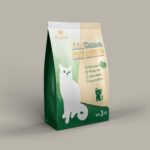
For private-label packaging, a physical production sample is often more useful than approving artwork alone.
The filled bag should be tested because product weight can affect the way the packaging performs.
Many pet brands want customized packaging.
However, custom printing often has minimum order requirements.
Before starting a private-label project, buyers should confirm:
A common mistake is developing artwork first and checking packaging MOQ later.
This can create delays or unexpected cost.
Packaging planning should therefore begin early.
Different markets have different preferences.
Some consumers prefer fragrance-free cat litter.
Others prefer lightly scented versions.
Possible fragrance concepts may include floral, fresh, or other profiles depending on market expectations.
However, buyers should evaluate scent intensity carefully.
An excessively strong fragrance may not suit every consumer or cat.
For B2B sourcing, scented and unscented products should be treated as different SKUs with separate specifications.
Cat litter can be relatively heavy and bulky.
Bulk density therefore affects:
Two products with the same net weight may occupy different volumes.
For exporters and importers, this becomes important when calculating container efficiency.
Buyers should therefore check both:
net weight and physical volume.
Before placing a commercial order for tapioca-based cat litter, buyers may request documents such as:
The exact requirements depend on the destination market and customer.
Pet litter is regulated differently across countries, so importers should verify local requirements before shipment.
A specification sheet cannot fully describe user experience.
Buyers should physically test samples.
A practical sample evaluation may include:
Observe how much liquid is taken up under a consistent method.
Check how quickly the clump forms.
Lift the clump and evaluate whether it breaks.
Pour the litter and observe visible dust.
Evaluate how easily granules move outside the tray.
Assess odor-management performance using consistent conditions.
Using the same test method for different suppliers gives a more meaningful comparison.
Consistency between production batches matters.
A single sample may perform very well but commercial supply needs repeatability.
Buyers should consider:
For private-label brands, repeatability is especially important because consumers expect the same experience each time they repurchase.
Plant-based cat litter is often marketed using environmental language.
However, claims such as:
should only be used when they can be supported appropriately.
Actual environmental performance may depend on:
A more cautious description is:
“Plant-based cat litter made with tapioca-derived materials.”
This describes the product without making an unsupported environmental promise.
Buyers sometimes focus on one metric.
For example:
highest absorption
or
fastest clumping.
But the product with the highest value in one category is not automatically the best overall product.
A strong commercial tapioca-based cat litter should balance:
The right balance depends on the target market.
A practical B2B checklist includes:
Comparing suppliers using the same checklist makes sourcing decisions more consistent.
Tapioca-based cat litter offers an interesting plant-based option for pet brands, distributors, retailers, and private-label buyers.
Its starch-rich formulation can support moisture absorption and clumping, but finished-product quality depends on much more than the raw material alone.
Particle size, density, processing, moisture control, packaging, and formulation all influence performance.
For B2B buyers, the best sourcing approach is to:
Rather than selecting the product with the strongest single marketing claim, buyers should look for consistent performance across absorption, clumping, dust, tracking, and odor management.
Abimex Group supplies Vietnamese tapioca-based cat litter for international distributors, retailers, pet product companies, and private-label brands.
Buyers can discuss product specifications, particle characteristics, retail or bulk packaging, OEM/private-label options, samples, and export requirements according to their project needs.