CASHEW NUT SHELL OIL

Walk down the dried fruit aisle and you’ll often see two mango snacks sitting side by side that get lumped into the same category, even though they are made differently and behave differently on the shelf. Soft dried mango vs mango fruit leather is a real distinction — one is a partially dehydrated piece of whole fruit, the other is a dried sheet of fruit puree — and the difference shows up in texture, ingredient labels, and shelf life.
This guide breaks down the soft dried mango vs mango fruit leather question in practical terms: how each is made, where each fits in a snacking lineup, and how to decide which format matches your brand before you commit to a production run.
Soft dried mango starts as whole ripe mango, peeled and cut into strips or slices, then dehydrated until it reaches a moisture level that keeps it chewy rather than crisp. The fruit’s natural fibre and cell structure stay intact throughout the process.
Mango fruit leather — sometimes called a fruit roll or fruit strip — starts from mango pulp or puree that is spread thinly onto a tray or belt and dried into a flexible sheet. Because the fruit structure is broken down before drying, the final texture is smooth and pliable rather than fibrous.
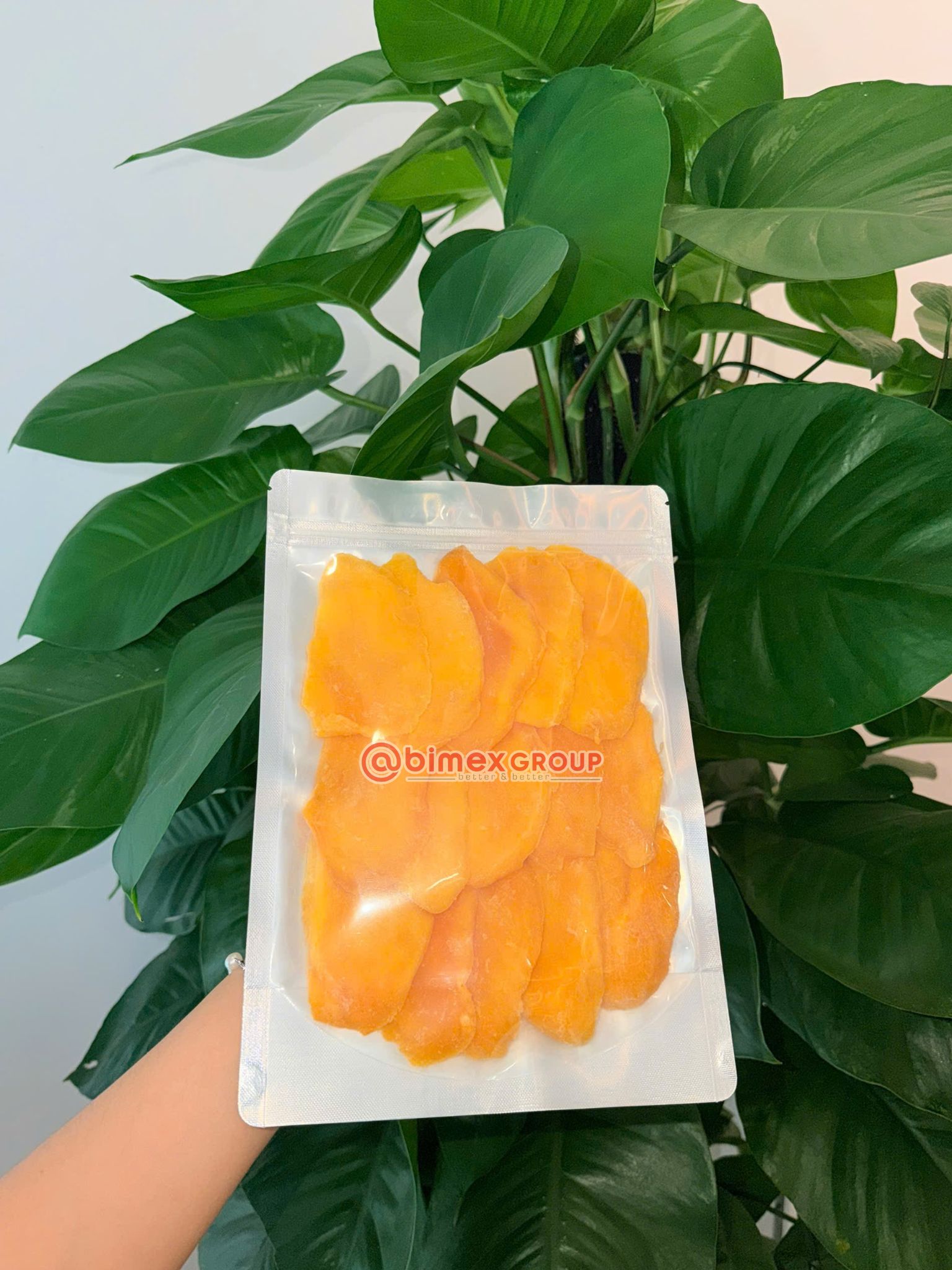
Soft dried mango keeps the recognisable look and chew of real fruit, which makes it a natural fit wherever a brand wants the snack itself to look like whole fruit.
Because the fruit structure stays intact, soft dried mango can be formulated with no added sugar for buyers who want a cleaner label, though some commercial versions are lightly sweetened for consistency.
Mango fruit leather trades the whole-fruit look for a thin, rollable format that is easy to portion and pack.
Because puree needs to hold together as a sheet, some fruit leather formulations rely on a binder such as pectin or a small amount of added sugar to get a workable texture, which is worth checking on the ingredient label.
| Parameter | Soft Dried Mango | Mango Fruit Leather |
|---|---|---|
| Base form | Whole fruit strips or slices | Puree sheet |
| Texture | Chewy, fibrous | Smooth, pliable |
| Typical moisture content | 15–20% | 12–18% |
| Added sugar | Often optional | Frequently needed for texture |
| Shelf life (sealed, ambient) | 9–12 months | 6–9 months |
| Best fit | Standalone snacking, bulk repack | Kids’ snacks, on-the-go formats |
| Step | Action |
|---|---|
| 1 | Define your shelf format — pouches of pieces favour soft dried mango; individually wrapped rolls favour fruit leather |
| 2 | Check your clean-label goals — soft dried mango is generally easier to formulate without added sugar |
| 3 | Consider your target consumer — fruit leather skews toward children’s snacking; soft dried mango covers a broader audience |
| 4 | Evaluate your supply chain — soft dried mango uses simpler processing; fruit leather requires puree and sheeting equipment |
| 5 | Request a Certificate of Analysis (COA) confirming moisture, water activity, and sugar content for the specific batch |
Labelling conventions for “fruit leather” and “dried mango” are not fully standardised across markets, so it pays to verify actual composition rather than relying on the product name alone. According to the Food and Agriculture Organization (FAO), consistent specification verification is one of the most effective ways buyers reduce quality disputes in tropical commodity trade.
No. Genuine mango fruit leather is made primarily from mango pulp or puree, while fruit-flavoured candy is typically built on a sugar or gelatin base with added flavouring and little or no real fruit content.
Not always. Many soft dried mango products are made from ripe, naturally sweet mango with no added sugar, though some commercial versions are lightly sweetened or treated for colour retention — always check the ingredient label.
Soft dried mango generally holds a longer sealed shelf life than fruit leather because its moisture content and surface area are more favourable for stability, though both depend heavily on packaging barrier quality.
Yes. Some suppliers offer both formats side by side — soft dried mango for classic snacking occasions and fruit leather for portable, kid-friendly formats — sourced from the same mango supply.
Soft dried mango vs mango fruit leather comes down to format and formulation, not one being inherently better than the other. Soft dried mango delivers a whole-fruit look and chew with an easier path to a no-added-sugar label, while mango fruit leather offers a portable, kid-friendly format built from puree. Matching the format to your shelf position and target consumer is what determines which one performs best for your brand.
At Abimex Group, we supply soft dried mango and other tropical dried fruit formats from Vietnam, with batch-specific COA confirming moisture, water activity, and sugar content for every shipment — Halal, Kosher, and FSSC 22000 certified.
Contact us to request samples or a technical specification sheet for either format.