CASHEW NUT SHELL OIL

CASHEW NUT SHELL OIL
RICE PROTEIN POWDER
RICE PROTEIN POWDER
DESICCATED COCONUT
Soft dried mango texture is one of the most noticeable quality characteristics for consumers and B2B buyers. A good piece of soft dried mango is generally expected to feel tender, flexible, and pleasantly chewy rather than overly hard, dry, sticky, or inconsistent.
However, texture is not determined by one factor alone. It can be influenced by mango variety, fruit maturity, slice thickness, drying conditions, moisture management, formulation, packaging, and storage environment.
For importers, distributors, private-label brands, and food manufacturers, understanding these factors can make it easier to evaluate product samples, define specifications, and communicate quality expectations with suppliers.
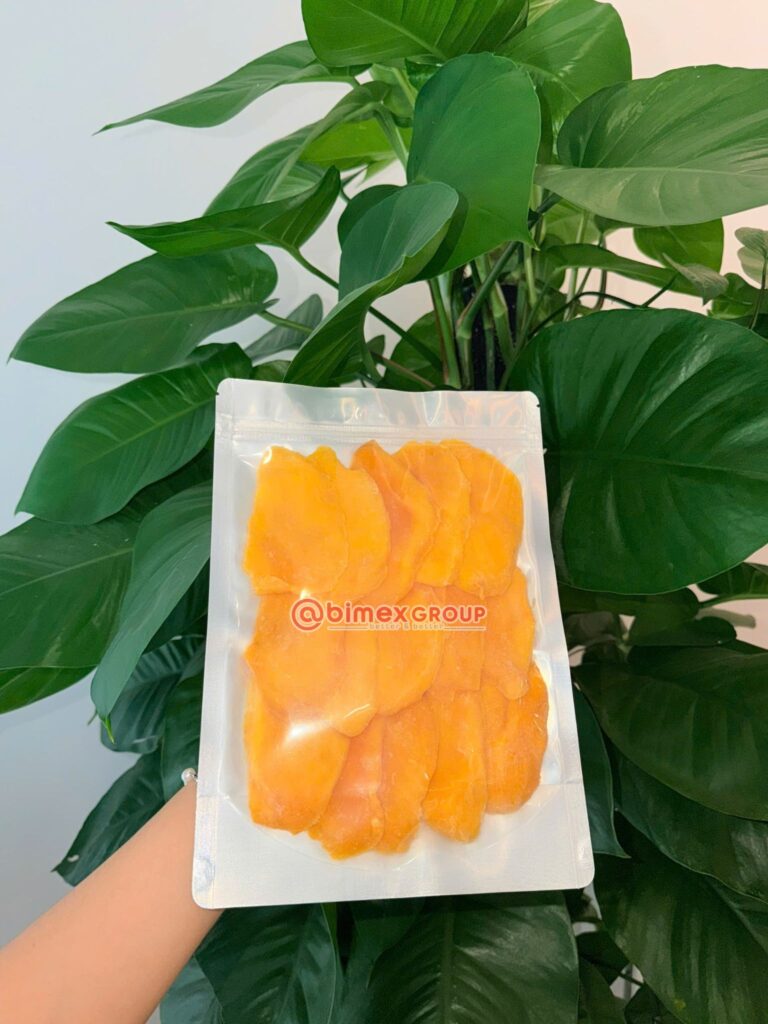
Table of Contents
ToggleThe final texture begins with the raw mango.
Different mango varieties can naturally vary in fiber structure, sugar content, acidity, firmness, and moisture. These characteristics can influence how the fruit responds to drying.
Fruit maturity is also important. Mangoes processed at different stages of ripeness may behave differently during drying because their internal structure, sugar level, and water content are not identical.
This means that even before processing begins, the raw material can contribute to differences in the finished product.
For commercial buyers, this is one reason a good quality-control process should look at both raw material selection and finished-product performance.
Moisture is one of the most important factors affecting softness and chewiness.
Soft dried mango is not intended to have the same low-moisture, crisp texture as fruit chips. Instead, enough moisture is generally retained to support a tender and flexible bite.
If too much moisture is removed, the mango may become firmer, tougher, or drier than expected. If too much remains, the product may feel overly soft, sticky, or less stable, depending on the formulation and storage conditions.
The balance is therefore important.
In addition to total moisture, manufacturers may also consider other parameters such as water activity and moisture distribution within the slice. These technical factors can influence both product stability and sensory quality.
For buyers, soft dried mango texture should therefore be evaluated together with moisture specifications rather than only by appearance.
Slice thickness can have a clear effect on eating experience.
Thicker pieces may retain a fuller, softer bite, while thinner pieces can dry more quickly and may feel firmer or chewier depending on the process.
Uniformity also matters.
If one batch contains a wide mix of very thick and very thin pieces, the texture may feel inconsistent from one piece to another. This can be especially noticeable in retail snack packs where consumers expect a similar experience throughout the package.
For food manufacturers and private-label brands, piece-size specifications can help improve consistency.
When discussing soft dried mango texture, buyers may want to define not only the desired softness but also the preferred slice dimensions and acceptable variation.
Drying conditions strongly influence the final product.
Temperature, drying time, and airflow all affect how quickly moisture leaves the mango slices. If processing conditions are too intense, the surface may dry faster than the interior, potentially creating a firmer outer layer.
On the other hand, a more controlled drying process can help manufacturers work toward a more even texture.
The exact drying conditions will vary by equipment, product formulation, mango variety, and target specification.
For this reason, it is better to think in terms of process control rather than assume that one fixed temperature or drying time is suitable for all soft dried mango products.
Consistency from batch to batch often depends on how carefully these variables are monitored.
Some soft dried mango products are made with added sugar or other permitted ingredients, while others may use different formulations.
These formulation choices can influence sweetness, surface feel, moisture behavior, and chewiness.
For example, added ingredients may affect how moisture is retained or distributed within the product. This can change the final sensory experience even when the mango slices look similar.
That is why buyers should always review the ingredient declaration when comparing products from different suppliers.
The drying method alone does not fully explain soft dried mango texture. Formulation is another important part of the overall picture.
Mango naturally contains fiber, and the amount and structure of that fiber can vary by variety and maturity.
Some fruit may produce a smoother bite, while other fruit may feel more fibrous.
This natural variation can influence chewiness, especially in thicker slices.
For B2B buyers, slight differences between batches may occur because mango is an agricultural raw material. The goal is not always perfect visual or sensory uniformity, but rather consistency within an agreed product specification.
A good supplier should be able to discuss the target texture and how the product is controlled within reasonable tolerances.
Packaging continues to influence the product after drying is complete.
Soft dried mango can exchange moisture with the surrounding environment if the packaging does not provide sufficient protection.
In humid conditions, the fruit may absorb moisture and become softer or stickier. In very dry conditions, it may gradually lose moisture and become firmer.
This is why soft dried mango texture can change during storage even when the product initially leaves the factory within specification.
Packaging material, seal quality, pack size, and storage conditions all play a role.
For international shipments, buyers should also consider the destination climate and expected storage environment when discussing packaging options.
Temperature and handling conditions can also affect product quality over time.
Exposure to excessive heat may accelerate certain chemical or physical changes, while repeated opening can expose the product to fresh air and humidity.
Large foodservice or bulk packs may be opened more frequently than smaller retail packs, creating different storage conditions after opening.
For this reason, the best packaging format depends partly on how quickly the product will be used.
Buyers should follow supplier storage guidance and avoid applying one generic rule to every product.
For B2B customers, consistency can be just as important as softness itself.
A retailer may want each pack to deliver a similar eating experience, while a food manufacturer may need consistent piece size and chewiness for downstream processing.
When evaluating soft dried mango texture, buyers may want to check:
Product samples are especially useful before bulk purchasing because they allow buyers to compare sensory expectations with written specifications.
Because mango is an agricultural product, some natural variation is normal.
Fruit from different harvests, growing areas, or maturity levels may not behave in exactly the same way during processing.
Slight differences in softness, color, or fiber structure can occur even when production controls remain consistent.
The important question is whether the product stays within an agreed specification and remains suitable for the intended market or application.
This is a more useful way to evaluate quality than expecting every piece to look and feel identical.
The ideal soft dried mango texture depends on the customer.
Some markets may prefer a very tender and soft bite, while others may prefer a firmer and chewier product. Retail snack brands, foodservice companies, and ingredient users may also have different expectations for piece size, stickiness, and packaging.
That is why clear communication with suppliers is important.
Before placing an order, buyers should define their target product characteristics, packaging requirements, destination market, and intended application.
Texture is the result of multiple factors working together, from raw mango selection and slice thickness to drying conditions, formulation, packaging, and storage.
Understanding soft dried mango texture can help B2B buyers evaluate products more effectively and choose specifications that better match their market.
Abimex Group supports international buyers looking for soft dried mango and other processed fruit products for retail, wholesale, foodservice, private-label, and ingredient applications.
From product specifications and packaging requirements to sourcing discussions and export coordination, Abimex Group works with customers to identify suitable options for different business needs.
Contact Abimex Group to discuss your soft dried mango requirements, preferred texture, packaging options, and sourcing needs for your target market.