CASHEW NUT SHELL OIL

CASHEW NUT SHELL OIL
RICE PROTEIN POWDER
RICE PROTEIN POWDER
DESICCATED COCONUT
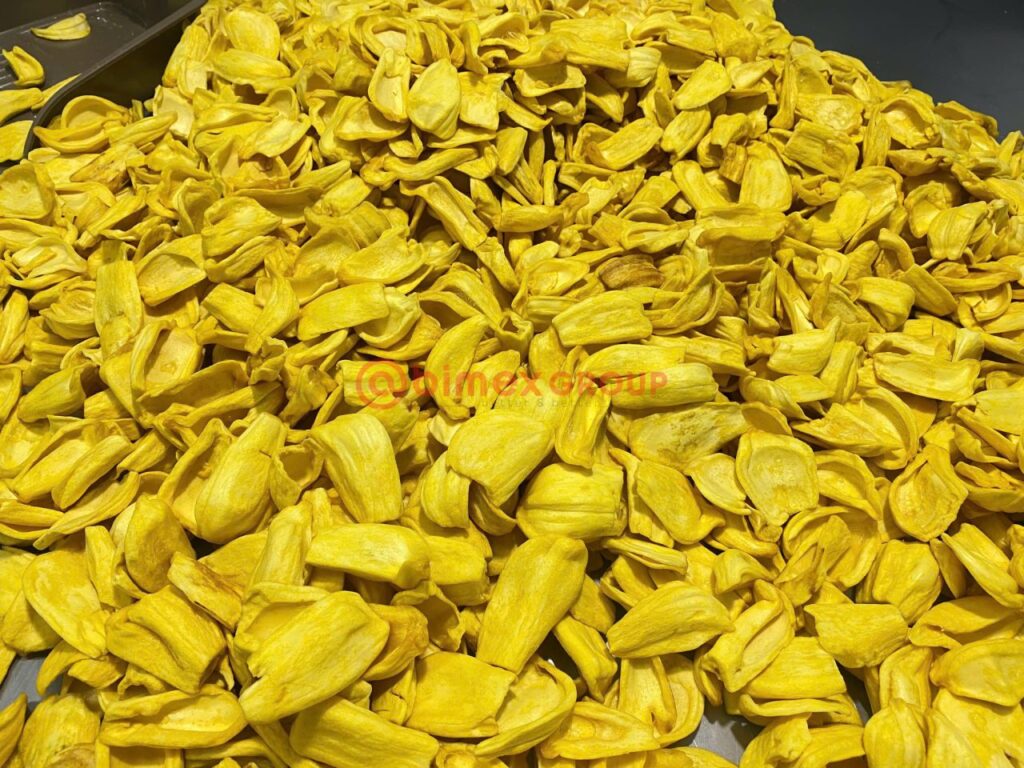
Jackfruit chips in the snack industry are gaining attention as brands look for products that offer tropical flavor, distinctive texture, and a clear point of difference from conventional potato- or corn-based snacks.
Made from jackfruit pieces that are dried or fried until crisp, jackfruit chips can be positioned in a variety of snack categories, from standalone retail packs to mixed snack formats and premium private-label ranges.
For importers, distributors, and snack manufacturers, the appeal lies not only in the fruit itself but also in how the finished product can fit into different merchandising and product-development strategies.
However, successful sourcing requires attention to more than taste alone. Texture, sweetness, oiliness, cut size, color, packaging, moisture control, and batch consistency all influence whether the product works well in a commercial snack program.
This article explains the main applications of jackfruit chips in the snack industry and what buyers should consider before launching or expanding a product line.
Table of Contents
ToggleJackfruit chips are made from prepared jackfruit pieces that are processed to achieve a dry, crisp, crunchy texture.
Depending on the production method, the product may be:
Vacuum-fried jackfruit chips are commonly used in commercial snack products because the process can help retain a recognizable fruit color and flavor while developing crispness.
The final product can vary in:
These differences matter because different snack brands target different consumer experiences.
The snack market is highly competitive.
Brands need products that are easy to understand but still feel distinctive.
Jackfruit chips can offer several advantages in product positioning.
They provide:
This makes jackfruit chips in the snack industry suitable for both mainstream and premium product concepts.
One of the most direct applications is a simple retail bag of jackfruit chips.
The product can be sold as:
In this format, the jackfruit chip itself is the main product.
Because there are no other ingredients to distract from the fruit, quality needs to be consistent.
Buyers should pay attention to:
Standalone packs are particularly sensitive to moisture because the consumer expects a crisp product immediately after opening.
Jackfruit chips can be positioned as part of a premium tropical snack portfolio.
A brand may combine several fruit-based products under the same range, such as:
In this type of product line, jackfruit adds variety in both flavor and texture.
Its irregular natural shape can also support a less processed visual identity compared with highly uniform extruded snacks.
For premium positioning, buyers usually place more emphasis on:
Another application is to combine jackfruit chips with other fruit snacks.
Possible combinations include:
This creates a mixed tropical snack product.
In this format, each ingredient needs to be evaluated for texture compatibility.
For example, a very crisp jackfruit chip may behave differently from a soft dried fruit in the same bag.
The manufacturer should consider:
This is important because combining ingredients with very different moisture levels can affect the final snack over time.
Jackfruit chips can also be used in trail-style snack mixes.
Possible ingredients may include:
In this format, jackfruit can provide a lighter, crisp tropical element.
However, the product must be physically strong enough to survive mixing and packing.
Thin or fragile pieces may break during handling.
Buyers should therefore test the jackfruit chips in the actual blend rather than evaluating them only as a standalone product.
Jackfruit chips can also be combined with nuts and seeds for more premium snack concepts.
Examples may include mixes with:
The contrast between crisp fruit and dense nut texture can create an interesting eating experience.
For this type of product, buyers should consider:
A fruit chip that is lightly sweet may pair differently with roasted nuts than a strongly sweetened version.
Jackfruit chips in the snack industry are also suitable for private-label development.
Retailers and snack brands may request customization in:
Private label can be attractive for buyers that want a unique tropical snack without investing in their own manufacturing facility.
However, packaging MOQ is an important consideration.
Custom printed bags often require higher minimum quantities than the first commercial order itself.
Private-label buyers should therefore confirm:
before finalizing the project.
Jackfruit chips are also well suited to e-commerce because they are:
However, e-commerce packaging must protect the product during parcel delivery.
The product may pass through:
This increases the risk of broken pieces.
For online sales, brands may need stronger secondary packaging or protective carton design.
Smaller jackfruit chip packs can be positioned for on-the-go consumption.
Potential channels include:
Small packs require careful cost management because packaging represents a larger share of the unit cost.
Buyers should evaluate:
The best size depends on the target market.
Jackfruit chips can also be used outside traditional retail.
Possible applications include:
In these channels, presentation can be just as important as product performance.
The packaging may need to be smaller, cleaner, and more premium.
For hospitality, a consistent appearance and limited broken pieces can be particularly important.
Although jackfruit chips are primarily a snack product, they can also be used as a crunchy topping or garnish.
Potential uses include:
In these applications, smaller pieces may actually be useful.
This creates an opportunity to use different size grades depending on the application.
Larger pieces may be better for retail snacking, while smaller pieces may work in food-service or topping formats.
For most snack applications, crunch is one of the most important quality characteristics.
A good jackfruit chip should provide a dry, crisp bite.
If too much moisture remains, the product may become:
Packaging therefore plays a major role after production.
Even a well-processed chip can lose crispness if the bag does not provide enough moisture protection.
Jackfruit naturally has a sweet flavor, but final sweetness can vary.
Factors include:
Some markets prefer a stronger sweet profile.
Others prefer a lighter, more fruit-forward taste.
Brands should therefore evaluate sample sweetness before ordering.
Ingredient declarations should also be checked to distinguish between natural fruit sweetness and added sugar.
Jackfruit chips are often expected to have an attractive golden-yellow color.
Color can influence shelf appeal.
Buyers should watch for:
Some natural variation is normal because fruit is an agricultural raw material.
However, excessive inconsistency may affect consumer perception.
Breakage is an important commercial issue.
Large intact chips usually look more premium than a bag dominated by small fragments.
Breakage can happen during:
Packaging design and carton strength can help reduce damage.
Buyers should agree on acceptable appearance and broken-piece expectations before large-scale orders.
For fried jackfruit chips, oil level affects both mouthfeel and consumer perception.
If the surface feels excessively oily, the product may seem heavy.
Manufacturers therefore need effective oil management after frying.
Buyers should evaluate:
Oil quality and process control also influence the finished snack.
Moisture is one of the biggest threats to crispy snacks.
Good packaging should help protect jackfruit chips in the snack industry from:
Barrier requirements depend on:
A visually attractive bag is not enough if it cannot maintain product quality.
Common packaging concepts may include:
The best format depends on:
A resealable zipper may add convenience for larger packs, while small packs may prioritize cost efficiency.
When sourcing jackfruit chips, buyers should evaluate:
A clear specification helps reduce misunderstanding after production.
Photos are useful, but they cannot show crunch or flavor.
Buyers should request samples before commercial orders.
A sample evaluation can include:
For private-label programs, it is also useful to test the final packaging format whenever possible.
A strong sample is only the beginning.
Long-term buyers need consistent supply.
Batch-to-batch variation can appear in:
Some natural variation is expected with fruit-based products.
However, suppliers should still work within agreed quality specifications.
Conventional snack categories are crowded.
Jackfruit provides a clear tropical identity that can help a brand stand out.
It can fit into:
This flexibility makes jackfruit chips in the snack industry useful for both new product launches and broader snack portfolios.
Marketing language should remain accurate.
Brands should avoid assuming that jackfruit chips are automatically:
unless these claims are supported by verified nutrition data and meet applicable labeling rules.
A safer positioning is based on:
Jackfruit chips in the snack industry can be used across many formats, including standalone retail packs, tropical snack ranges, trail mixes, private-label products, e-commerce, hospitality, and mixed snack concepts.
Their main commercial strengths include:
However, successful sourcing requires attention to product consistency.
Buyers should evaluate:
The best product is not simply the one with the strongest marketing claim. It is the one that fits the target market, distribution channel, and consumer experience.
Abimex Group supplies Vietnamese crispy jackfruit chips for international importers, distributors, retailers, snack brands, and private-label projects.
Buyers can discuss product specifications, samples, packaging formats, OEM/private-label requirements, and available export documentation based on project needs.