CASHEW NUT SHELL OIL

CASHEW NUT SHELL OIL
RICE PROTEIN POWDER
RICE PROTEIN POWDER
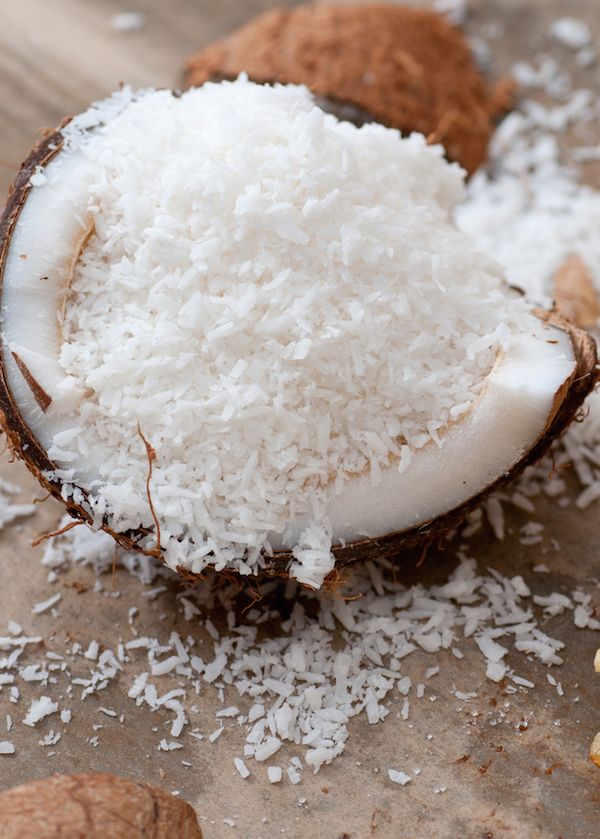
DESICCATED COCONUT
Desiccated coconut allergen labeling can be confusing for food manufacturers, importers, retailers, and private-label brands because the word “coconut” does not fit neatly into the way consumers commonly think about nuts.
Coconut grows on a tree and contains a hard outer shell, so it is easy to assume that it should always be treated as a tree nut. However, botanical classification and food-allergen regulation are not the same thing.
More importantly, allergen-labeling rules can vary by market and can change over time.
For example, the U.S. Food and Drug Administration revised its food-allergen guidance in 2025 and no longer includes coconut in the list of tree nuts considered major food allergens. Coconut used as an ingredient still generally needs to appear in the ingredient list under its common or usual name, but FDA states that coconut should not be included in a “Contains” statement reserved for major food allergens under the revised guidance.
So, is desiccated coconut a tree nut? The best answer is: it depends on whether you are talking about botany, consumer terminology, or a specific market’s allergen-labeling regulations.
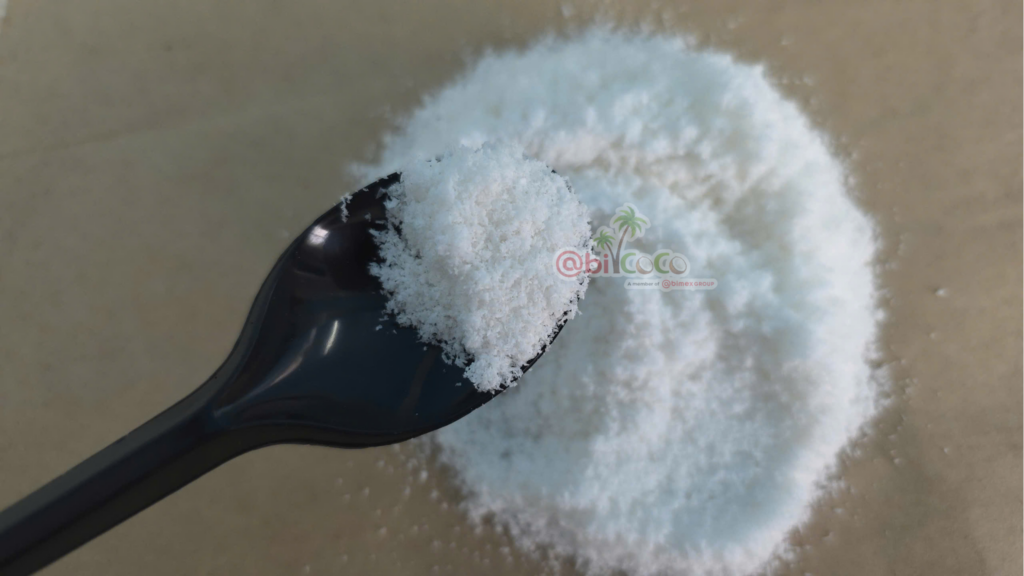
Table of Contents
ToggleFrom a botanical perspective, coconut is generally classified as a type of fruit known as a drupe rather than a true botanical nut.
This is one reason the everyday term “tree nut” can cause confusion.
Foods commonly called tree nuts can belong to different botanical categories. Regulatory authorities therefore do not necessarily rely only on botanical definitions when deciding which foods must be treated as major allergens.
For food businesses, botanical classification is interesting, but it should not be the sole basis for desiccated coconut allergen labeling.
The destination country’s food-labeling regulation is what ultimately matters.
For many years, companies exporting coconut products to the United States frequently treated coconut as a tree nut for allergen-labeling purposes.
This happened because previous FDA guidance included coconut among the foods treated as tree nuts for major-allergen labeling.
That changed with the FDA’s fifth-edition Food Allergen Q&A Guidance issued in January 2025.
FDA subsequently clarified that coconut is no longer included in its Tree Nut List for major food allergens. FDA also states that foods removed from that list should not appear in a “Contains” statement that is reserved for major food allergens.
This is an important update for exporters and buyers who may still be using older specifications, packaging templates, or allergen declarations.
Under current FDA guidance, coconut is not considered one of the tree nuts treated as a major food allergen.
FDA’s major allergen framework covers milk, eggs, fish, Crustacean shellfish, qualifying tree nuts, peanuts, wheat, soybeans, and sesame.
For coconut specifically, FDA explains that:
For a simple desiccated coconut product, an ingredient declaration might therefore identify the ingredient as “Coconut” or another appropriate common name depending on the formulation and local labeling requirements.
However, companies should not automatically copy an allergen statement from an old label.
Labels already in circulation may still show coconut in a “Contains” statement during the transition from previous FDA guidance, and FDA has acknowledged that label changes may occur when packaging is reprinted.
The European Union uses a defined list of 14 allergens that require specific declaration when present in food.
The EU’s regulated nut category includes almonds, hazelnuts, walnuts, cashews, pecans, Brazil nuts, pistachios, and macadamia/Queensland nuts.
Coconut is not included in that nut list.
EU regulations require allergens listed under the applicable legislation to be clearly emphasized in the ingredient list, typically through typography such as bold type, a different style, or a contrasting background.
Therefore, coconut should not automatically be highlighted as one of the EU’s regulated nut allergens simply because its English name contains the word “nut.”
Again, the complete product formulation matters.
A desiccated coconut product containing another regulated allergen would need to be assessed based on all ingredients, not coconut alone.
A key distinction must be made between regulatory major-allergen classification and whether an individual person can experience an allergic reaction to a food.
A food does not have to appear on a country’s major-allergen list for an allergy to be possible.
FDA’s removal of coconut from its Tree Nut List does not mean that no one can be allergic to coconut. FDA specifically notes that consumers with coconut allergy still need to read ingredient lists, because coconut remains identifiable as an ingredient even though it is no longer treated as a major allergen under the revised U.S. framework.
This distinction is important for responsible marketing.
Food companies should avoid statements such as:
“Coconut is allergen-free.”
That would be too broad.
A more accurate statement is that coconut’s treatment under mandatory major-allergen labeling depends on the applicable jurisdiction.
For desiccated coconut allergen labeling, the first step is to make sure the ingredient list accurately reflects the product formulation.
A basic product may contain:
The ingredient declaration should match the actual product.
If another allergenic ingredient is present, that ingredient may trigger separate allergen-labeling requirements.
For example, a sweetened coconut product containing an ingredient derived from milk, soy, or another regulated allergen should be assessed differently from pure desiccated coconut.
The product name “desiccated coconut” by itself is therefore not enough to determine the complete allergen statement.
One of the biggest mistakes exporters can make is using the same allergen statement for every destination market.
For current U.S. FDA-regulated foods, FDA says coconut should not be included in the “Contains” statement reserved for major allergens because it is no longer on the agency’s Tree Nut List.
In the EU, coconut is likewise not part of the regulated nut category among the 14 allergens requiring emphasis.
That does not mean companies should simply delete every coconut-related statement worldwide.
Instead, the importer should confirm the destination-market requirements and make sure the label reflects both:
Another issue that should not be confused with ingredient labeling is allergen cross-contact.
A factory may process several products on the same site.
If other allergens are handled within the facility, a manufacturer may need to assess cross-contact risks through its food safety and allergen management system.
Relevant questions may include:
This is separate from whether coconut itself is classified as a major allergen.
A product could contain coconut while also having a separate cross-contact risk involving another allergen.
For international buyers, reviewing the product specification alone may not be enough.
When allergen status is important, useful documents may include:
The buyer should compare these documents with its own destination-market labeling requirements.
This can help identify contradictions before packaging is printed or cargo is shipped.
For OEM and private-label projects, allergen labeling should be reviewed before mass packaging production.
This is especially important because changing printed retail bags after production can be expensive.
A practical workflow is:
Product formulation → Ingredient declaration → Allergen review → Local regulatory review → Packaging artwork approval → Printing
If the formulation changes later, the label should be reviewed again.
Do not assume that an approved label for one SKU automatically works for another product.
The U.S. and EU examples show why desiccated coconut allergen labeling should be handled market by market.
Other countries may define allergens, precautionary statements, ingredient formatting, or label language differently.
Retailers may also impose internal requirements that go beyond national legislation.
Therefore, exporters should avoid universal statements such as:
All three can be misleading depending on the market.
The safer B2B approach is to provide accurate product information and allow the importer or regulatory specialist to confirm the final market-specific label.
Before approving packaging for desiccated coconut, buyers should verify:
This last point is particularly important for U.S. products because coconut’s FDA treatment changed in 2025.
Several avoidable errors can create confusion.
Calling coconut a fruit or drupe does not by itself determine labeling obligations.
Previous U.S. guidance treated coconut differently from current FDA guidance.
Different markets use different regulatory frameworks.
An ingredient may still need to be named even when it is not classified as a major allergen.
The allergen status of coconut itself is different from possible exposure to other allergens at a manufacturing facility.
The simplest practical answer is:
Botanically, coconut is not usually described as a true nut. From an allergen-labeling perspective, its regulatory treatment depends on the destination market.
Under current FDA guidance in the United States, coconut is no longer included among the tree nuts FDA considers major food allergens.
Under EU allergen rules, coconut is not included among the specified nuts in the 14 regulated allergen categories.
However, coconut should still be properly identified as an ingredient where required, and companies should not interpret these classifications as proof that coconut allergy cannot occur.
Desiccated coconut allergen labeling requires more than answering whether coconut is technically a tree nut.
Buyers and manufacturers should distinguish between botanical terminology, individual allergic reactions, and legally defined major-allergen categories.
The safest commercial approach is to:
For international trade, this approach is far more reliable than assuming that one allergen statement applies everywhere.
This article provides general information only and is not a substitute for legal or regulatory advice. Importers and brand owners should confirm the final label with the competent authority, regulatory adviser, or qualified specialist in the destination market.
Abimex Group supplies Vietnamese desiccated coconut for international importers, distributors, food manufacturers, bakery and confectionery companies, and other B2B customers.
Different cuts and product specifications can be discussed based on buyer requirements and product availability.
Buyers can request product specifications, ingredient information, available allergen documentation, samples, and export-related documents for evaluation.