CASHEW NUT SHELL OIL

When buyers specify desiccated coconut for a new product, most conversations focus on fat content or moisture — but grind size is just as important and far more likely to be overlooked. Fine vs coarse desiccated coconut is a textural decision that affects how the ingredient distributes through a batter, how it browns, and how it feels on the tongue in a finished bakery or snack product.
This guide breaks down the fine vs coarse desiccated coconut question in practical terms: how each grade is produced, where each performs best, and how to decide which particle size fits your formulation before you place a bulk order.
Desiccated coconut starts as the same raw material regardless of final grade: fresh coconut meat that is washed, grated, and dried. Particle size is created afterward, when the dried meat is passed through sieves or cutting screens. Fine desiccated coconut is sieved to a small, sand-like particle, medium grades sit in between, and coarse desiccated coconut is left in larger, more visible strands or flakes. No extra ingredients are involved — the difference is mechanical, not compositional.
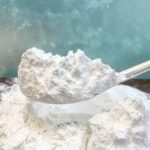
Fine desiccated coconut blends smoothly into batters, pastes, and liquids without leaving obvious pieces behind. It is the grade most manufacturers reach for when coconut needs to disappear into a formulation rather than stand out visually.
The trade-off is surface area. Fine desiccated coconut exposes more of its natural oil to air, which can shorten the practical shelf window once a package is opened, and it can clump in humid storage conditions if packaging isn’t sufficiently moisture-resistant.
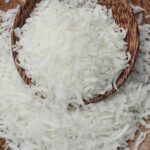
Coarse desiccated coconut keeps its shredded structure after drying, giving finished products a visible, chewy coconut presence rather than a background flavour note.
The trade-off runs the other way: coarse pieces can distribute unevenly in high-speed, automated mixing lines, and some recipes need a longer soak or hydration step before the coconut integrates fully into a batter.
| Parameter | Fine Desiccated Coconut | Coarse Desiccated Coconut |
|---|---|---|
| Typical particle size | 1–2 mm | 4–8 mm |
| Mouthfeel | Smooth, blends in | Distinct, chewy |
| Mixing behaviour | Disperses evenly | May need longer mixing or soaking |
| Best fit | Fillings, coatings, beverages | Granola, macaroons, garnish |
| Packing density | Higher, less air space | Lower, more air space |
| Shelf life (sealed, ambient) | 10–14 months | 12–18 months |
| Step | Action |
|---|---|
| 1 | Check your process — automated filling and depositing lines usually run smoother with a fine grind |
| 2 | Consider mouthfeel goals — if visible coconut pieces are part of the sell, coarse is the better fit |
| 3 | Evaluate moisture uptake — finer grinds absorb liquid faster, which can change batter hydration |
| 4 | Confirm packaging — coarse grind needs more headspace management to avoid crushing during transit |
| 5 | Request a Certificate of Analysis (COA) with a documented sieve/mesh specification, not just a grade name |
Grade names like “fine” or “coarse” are not fully standardised across suppliers, so the same label can mean slightly different particle sizes depending on where it was produced. Before committing to a bulk order, request a Certificate of Analysis showing sieve analysis alongside moisture and fat content. According to the Food and Agriculture Organization (FAO), consistent specification verification is one of the most effective ways buyers reduce quality disputes in tropical commodity trade.
No. Fine and coarse desiccated coconut come from the same coconut meat. The difference is entirely in how the dried meat is cut and sieved afterward, not in the raw material itself.
Not dramatically on its own, though finer grinds can taste slightly milder over time because more surface area is exposed to air, which can accelerate flavour fade if storage isn’t airtight.
Not always on a like-for-like basis. Finer grind packs more densely by volume, so swapping grades by volume rather than weight can quietly change the fat and moisture balance in your formulation.
Specify a sieve or mesh range rather than just “fine” or “coarse” — for example, “80% passing a 2 mm sieve” — and request COA confirmation of the sieve analysis for every shipment. This avoids ambiguity between suppliers who may define grades differently.
Fine vs coarse desiccated coconut is a texture and process decision, not a quality ranking — neither grade is universally “better.” Fine desiccated coconut disappears smoothly into fillings, coatings, and beverages, while coarse desiccated coconut delivers the visible bite and chew that granola, macaroons, and garnish applications rely on. Matching particle size to your process and your finished product’s mouthfeel is what determines whether the ingredient performs the way your formulation team expects.
At Abimex Group, we supply desiccated coconut in fine, medium, and coarse grades from Vietnam, with batch-specific COA confirming sieve analysis, moisture, and fat content for every shipment — Halal, Kosher, and FSSC 22000 certified.
Contact us to request samples or a technical specification sheet for any grind size.