CASHEW NUT SHELL OIL

CASHEW NUT SHELL OIL
RICE PROTEIN POWDER
RICE PROTEIN POWDER
DESICCATED COCONUT
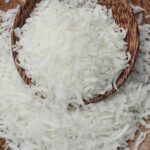
Desiccated coconut is a widely used coconut ingredient in bakery, confectionery, snack, cereal, dairy-style, dessert, and food manufacturing applications. Produced from mature coconut kernel, it is finely prepared and dried to create a shelf-stable ingredient with a characteristic coconut taste, aroma, and texture.
For international food manufacturers and ingredient importers, however, buying desiccated coconut involves more than choosing between fine and medium cuts.
Fat content, particle size, moisture, microbiological quality, color, flavor, packaging, and production consistency can all influence how the ingredient performs in the final application.
Understanding these factors can help buyers choose the right desiccated coconut specification and communicate requirements more clearly with suppliers.
Table of Contents
ToggleDesiccated coconut is made from the white kernel of mature coconuts.
The brown outer skin is generally removed before the white coconut meat is cleaned, processed, reduced to the required particle size, and dried.
The finished product is normally white to creamy white and retains the characteristic flavor and aroma of coconut.
Unlike fresh grated coconut, desiccated coconut has much lower moisture, making it more suitable for industrial storage, transportation, and food manufacturing.
It is commonly supplied in:
The correct grade depends on the buyer’s final application.
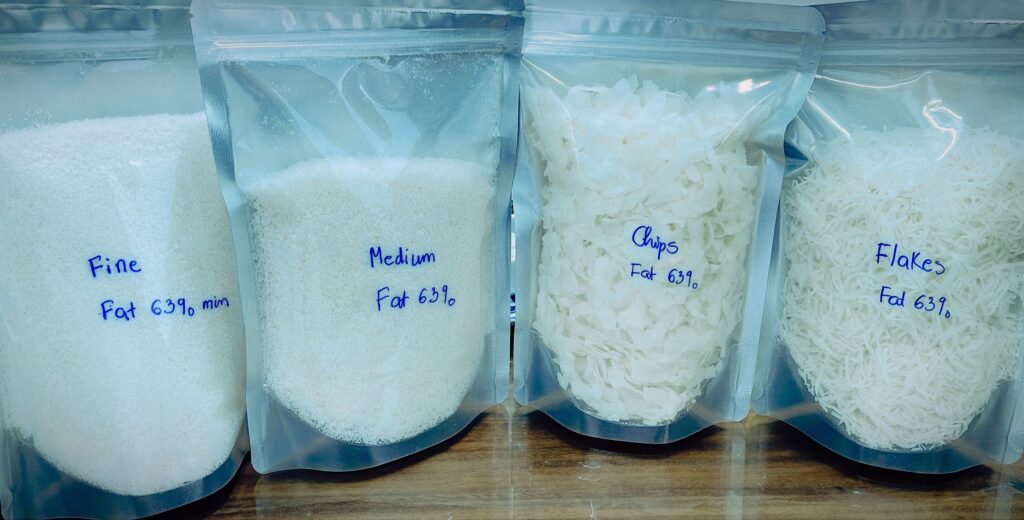
Particle size is one of the first specifications buyers usually consider.
Fine-grade coconut consists of smaller particles.
It is commonly selected when manufacturers want the coconut to disperse more evenly through the product.
Potential applications include:
Its smaller particle size can provide a more uniform texture and reduce the visual prominence of individual coconut pieces.
Medium-grade coconut has a larger and more noticeable particle structure.
It may be preferred when the finished food should provide more visible coconut texture and chew.
Applications may include:
The terms “fine” and “medium” can vary slightly between suppliers, so professional buyers should request a particle-size specification rather than relying only on the product name.
Fat content is another major factor.
High-fat desiccated coconut retains a relatively high proportion of the coconut’s natural oil.
This can contribute to:
High-fat grades are widely used in bakery, confectionery, fillings, and products where coconut flavor is an important part of the sensory profile.
However, fat content can also affect product storage and formulation behavior, so manufacturers should select the grade according to the intended use.
Lower-fat or reduced-fat coconut contains less natural coconut fat.
It may offer a different texture and processing profile compared with high-fat material.
Possible applications depend on the formulation and product target.
Manufacturers may select lower-fat grades based on:
A lower-fat product should not simply be considered interchangeable with high-fat desiccated coconut.
Testing should be conducted in the actual formulation.
The exact process varies by manufacturer, but production generally includes several main stages.
Mature coconuts are selected as the raw material.
Raw coconut quality matters because it affects flavor, color, and finished-product consistency.
The shell is removed, followed by removal of the brown skin to obtain the white coconut kernel.
The kernel is cleaned before further processing.
The coconut meat is grated, cut, or milled according to the required grade.
Moisture is reduced under controlled processing conditions.
This is a critical step because excessive residual moisture can affect storage stability, while overly aggressive drying may influence color or texture.
After drying, the product is cooled, inspected, and packed in suitable food-grade packaging.
Manufacturers may also apply additional quality-control steps depending on their process and customer requirements.
Moisture is one of the most important specifications for desiccated coconut.
A properly dried product should remain free-flowing and suitable for storage under the recommended conditions.
If moisture is too high, potential issues may include:
However, extremely low moisture is not automatically better.
The target should match the product specification and intended application.
Buyers should therefore review the manufacturer’s moisture specification and verify batch results through available quality documentation where required.
Coconut naturally contains oil, and the retained fat level strongly influences its sensory profile.
Higher-fat coconut often provides a more intense coconut character.
This can affect:
For B2B purchasing, fat percentage should therefore be included in the product specification rather than described only as “high fat” or “low fat.”
Good-quality desiccated coconut is generally expected to have a natural white or creamy-white appearance.
Color is especially important in products where coconut remains visible, such as:
Excessive yellowing or discoloration can affect the appearance of the finished food.
Color may be influenced by:
Buyers should review representative samples before confirming commercial supply.
High-quality desiccated coconut should have a clean, characteristic coconut flavor and aroma.
Unusual odors may indicate potential issues related to:
Flavor evaluation is therefore an important part of supplier qualification.
For products with long international transit times, buyers should also review packaging and storage recommendations.
Because coconut contains natural fat, lipid quality can be relevant to product stability.
Food buyers may monitor parameters such as:
depending on their quality requirements.
These tests can provide information related to fat condition and oxidation.
The appropriate limit should be agreed between buyer and supplier based on product requirements, applicable standards, and intended storage conditions.
Like other food ingredients, desiccated coconut should be produced under suitable food safety controls.
Buyers may request microbiological specifications for parameters such as:
Specific limits depend on customer requirements and destination-market regulations.
Manufacturers should not assume that one microbiological specification is accepted in every country.
Importers should communicate their limits clearly before production.
Some coconut products or manufacturing processes may involve sulfur dioxide controls.
Different markets and customers can have different requirements regarding SO₂.
This is especially important for buyers supplying:
The buyer should confirm the maximum acceptable level and any labeling implications before placing the order.
One reason desiccated coconut is widely traded is its versatility.
It can be used in:
Fine grades may blend into dough or fillings, while larger grades may be used for toppings.
Desiccated coconut is widely used in:
Its flavor pairs especially well with chocolate and sugar-based formulations.
Coconut can add tropical flavor and texture to:
The desired cut depends on the visual and texture requirements.
Applications include:
Desiccated coconut may also be used in snack formulations and energy-style products.
These terms are sometimes used loosely, but they can describe different particle structures.
Desiccated coconut usually refers to dried coconut that has been shredded or ground into relatively small particles.
Coconut flakes may be:
For professional sourcing, buyers should avoid relying only on common names.
Instead, confirm:
This reduces misunderstanding between buyer and supplier.
Packaging plays an important role in protecting desiccated coconut during international transport.
The packaging should help protect the product from:
Industrial desiccated coconut is commonly supplied in food-grade bags or multi-layer packaging depending on the supplier and buyer requirements.
The exact packaging structure should be confirmed before shipment.
For long-distance sea freight, container cleanliness and moisture management should also be considered.
Desiccated coconut should generally be stored in conditions that help protect it from:
Because coconut contains natural fat, excessive heat and poor storage conditions may negatively affect sensory quality over time.
Specific storage instructions and shelf-life information should come from the manufacturer for the particular product supplied.
Depending on the target market, buyers may request food safety or religious certifications.
Examples can include:
The required documentation varies by customer and destination.
Certification should always be checked for validity, scope, factory name, product coverage, and expiration date.
When sourcing desiccated coconut, B2B buyers should consider the complete specification.
A practical checklist may include:
The more clearly these requirements are agreed before production, the lower the risk of quality disputes after shipment.
A specification sheet provides important numerical information, but it cannot fully communicate sensory characteristics.
Before commercial ordering, buyers should evaluate a representative sample for:
For sensitive applications, pilot production using the sample may also be useful.
This helps determine whether the selected grade performs correctly in the buyer’s formulation.
For large manufacturers, consistency can be just as important as individual test results.
Variations in:
can affect finished-product quality.
Buyers should therefore consider the supplier’s ability to maintain agreed specifications across repeated shipments.
A well-defined specification, quality-control system, and batch COA can support better consistency.
Comparing suppliers only by price per metric ton can be misleading.
A lower-priced product may create additional costs if it causes:
Commercial buyers should therefore consider:
price + specification + consistency + documentation + service + logistics
rather than price alone.
Desiccated coconut is a versatile ingredient used across bakery, confectionery, snacks, cereals, desserts, and many other food applications.
However, choosing the correct product requires understanding more than the product name.
Fine and medium grades behave differently.
High-fat and lower-fat products provide different sensory and processing characteristics.
Moisture, fat content, particle size, color, flavor, microbiology, oxidation parameters, packaging, and certification can all influence whether the product is suitable for a specific customer.
For international B2B buyers, the best sourcing approach is to:
Clear communication between buyer and supplier is one of the most important factors in building a stable long-term supply program.
Abimex Group supplies Vietnamese desiccated coconut for international importers, food manufacturers, distributors, bakery companies, confectionery producers, and other B2B customers.
Available specifications can be discussed according to buyer requirements, including different cuts and fat levels.
Buyers can request product specifications, representative samples, available certifications, quality documentation, and export quotations.