CASHEW NUT SHELL OIL

CASHEW NUT SHELL OIL
RICE PROTEIN POWDER
RICE PROTEIN POWDER
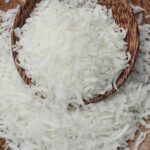
DESICCATED COCONUT
Desiccated coconut in biscuit manufacturing plays a vital role in enhancing flavor, texture, structural stability, and product differentiation. In modern industrial bakery production, coconut is not merely a decorative ingredient — it is a multifunctional raw material that directly influences product quality and market positioning.
As global consumers increasingly demand natural, plant-based, and clean-label products, biscuit manufacturers are incorporating desiccated coconut to create premium and value-added product lines. This article explores the technical and commercial applications of desiccated coconut within industrial biscuit production systems.

Table of Contents
ToggleOne of the most important applications of desiccated coconut in biscuit manufacturing is its ability to provide authentic coconut flavor without artificial additives.
Desiccated coconut is produced by removing moisture from fresh coconut kernel under controlled drying conditions. It retains its natural oil content and characteristic aroma compounds, making it ideal for:
Because it is a minimally processed ingredient, it supports clean-label claims such as:
Texture is a key quality indicator in biscuits. The inclusion of desiccated coconut modifies the internal crumb structure and surface texture.
Different particle sizes create different effects:
In biscuit dough formulations, coconut fiber interacts with flour and fat systems, influencing water absorption and structural integrity during baking.
A technical advantage of desiccated coconut in biscuit manufacturing is its contribution to dough structure.
Desiccated coconut contains:
Because of its fiber composition, it absorbs part of the available water in dough, slightly increasing dough consistency. Manufacturers typically adjust water levels accordingly to maintain machinability.
Its fat content also supports tenderization, particularly in butter cookies and shortbread-style biscuits.
Beyond dough inclusion, desiccated coconut is widely used as a topping or coating material.
Applications include:
This enhances:
In competitive retail environments, visible coconut flakes help products stand out on shelves.
Another important use of desiccated coconut in biscuit manufacturing is in fillings.
In cream-based fillings:
In fruit-based fillings:
Proper formulation ensures that water migration between biscuit shell and filling remains controlled, preserving crispness during shelf life.
As the demand for plant-based snacks increases globally, desiccated coconut supports product innovation strategies.
It contributes:
Although coconut is energy-dense, controlled inclusion levels allow manufacturers to develop premium, fiber-enhanced biscuit lines without compromising texture.
From a production standpoint, desiccated coconut offers several operational advantages:
Because moisture control is critical in biscuit production, properly stored desiccated coconut supports extended product shelf life when integrated into balanced formulations.
The global bakery industry increasingly values ingredients that provide multifunctionality. Desiccated coconut in biscuit manufacturing delivers flavor, texture, structural benefits, and visual appeal in a single ingredient.
For industrial producers seeking:
Desiccated coconut remains a strategic and technically reliable solution.
Looking to enhance your biscuit formulations with high-quality desiccated coconut?
Abimex Group supplies consistent, export-standard desiccated coconut tailored for industrial biscuit manufacturing.
Contact us today to request specifications, samples, or a competitive quotation for your next production plan.