
CASHEW NUT SHELL OIL

Looking for a simple desiccated coconut recipe to demonstrate how coconut works in baked products? Coconut oat cookies are an easy concept that highlights the texture, aroma, and visual appeal desiccated coconut can bring to a cookie formulation.
When combined with oats and other typical cookie ingredients, desiccated coconut can contribute a slightly chewy bite, visible coconut texture, and an attractive golden appearance during baking.
This makes coconut cookies a useful application idea for:
The recipe concept in this article is provided for inspiration only and has not been tested as a standardized Abimex formulation. Ingredient quantities, baking temperature, and baking time should be developed and validated according to the actual recipe and equipment being used.
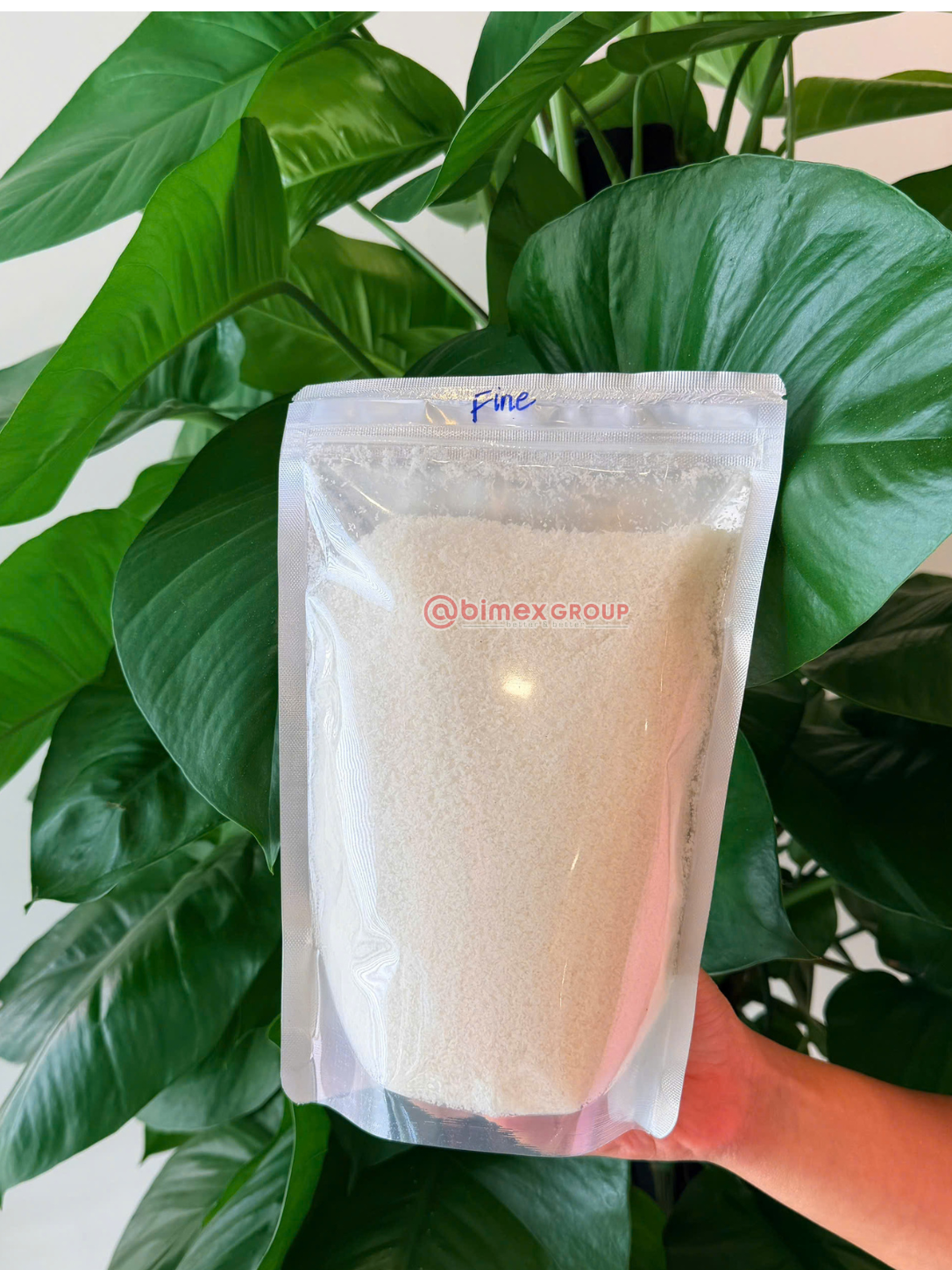
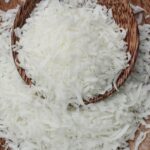
Desiccated coconut is coconut meat that has been shredded or ground and dried to reduce moisture.
In baking applications, it can contribute more than coconut flavor.
Depending on the grade and recipe, desiccated coconut may add:
This versatility is one reason desiccated coconut baking applications extend from cookies and cakes to macaroons, fillings, toppings, and snack products.
In coconut oat cookies, the interaction between oats and coconut can create a combination of grain texture and coconut chewiness.
A basic coconut oat cookie concept may include ingredients such as:
The exact quantities will depend on the desired cookie style.
A softer cookie may require a different formulation from a thin, crisp cookie.
For commercial development, manufacturers should evaluate ingredient ratios through controlled trials rather than relying on a universal formula.
One of the most noticeable contributions of coconut is texture.
Desiccated coconut contains fibrous particles that remain physically present after mixing and baking.
These particles can give coconut cookies a more noticeable bite than a completely smooth cookie dough.
Depending on:
the finished cookie may range from relatively soft and chewy to more crisp and textured.
This means the coconut grade should be selected according to the desired eating experience.
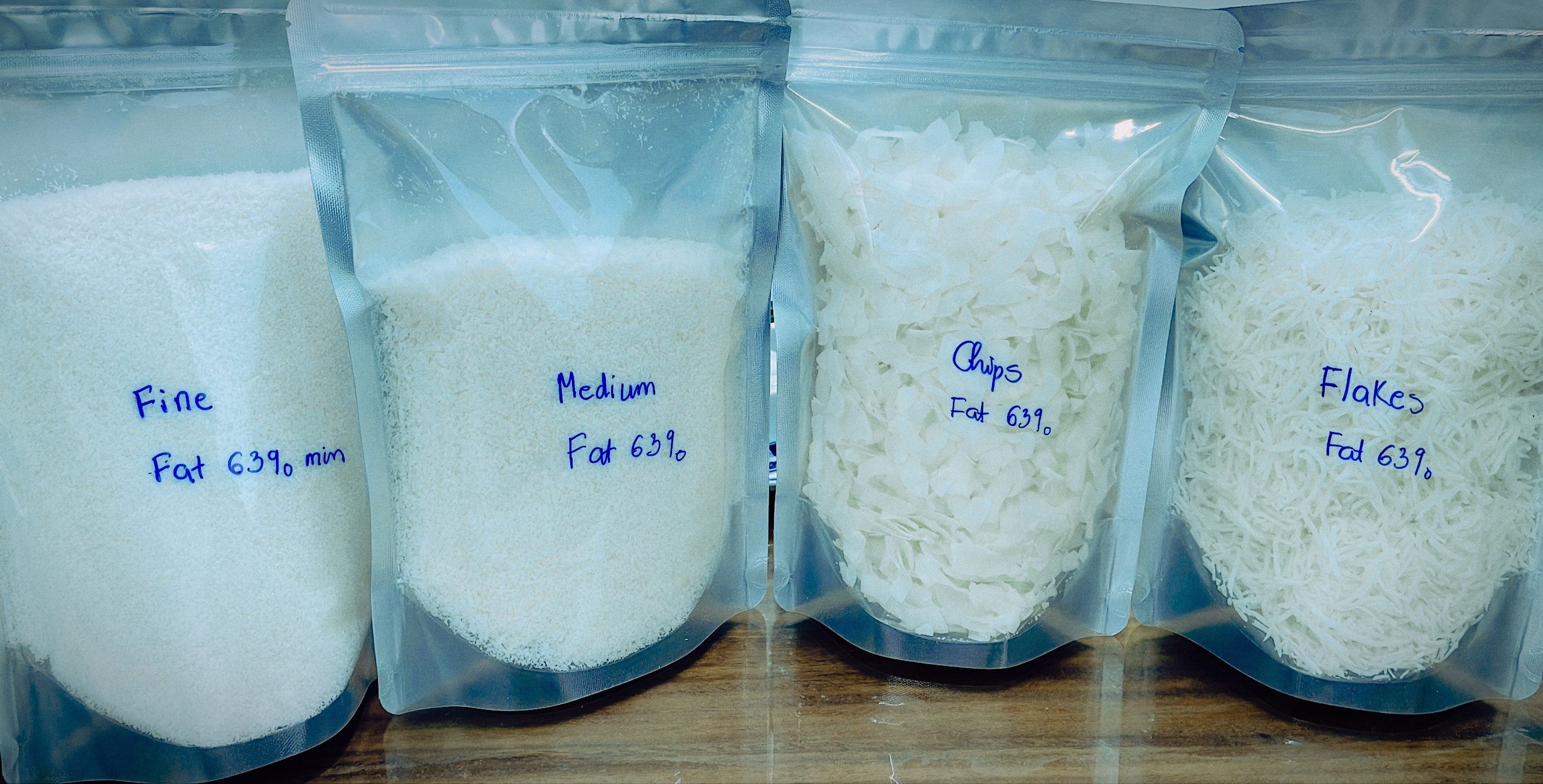
Particle size can change both texture and appearance.
Fine coconut has smaller particles and may:
Fine coconut can be useful when manufacturers want coconut flavor and texture without highly visible pieces.
Medium coconut has larger, more noticeable particles.
It may provide:
Neither grade is automatically better for a desiccated coconut recipe.
The best option depends on the target product.
During baking, cookie color develops through several interactions involving the full formulation and baking conditions.
Desiccated coconut itself may also take on a more toasted-looking appearance as the product is baked.
This can help create the familiar golden surface often associated with coconut cookies.
However, final color is influenced by more than coconut.
Other factors include:
For this reason, manufacturers should evaluate final color using their actual production process.
Oats contribute their own characteristic texture to the cookie.
When combined with desiccated coconut, the result can provide multiple layers of texture:
oat texture + coconut chew + baked cookie structure.
This makes coconut oat cookies particularly useful for showing how ingredients interact rather than focusing on coconut as a standalone topping.
Product developers can adjust the visual balance between oats and coconut according to the desired concept.
The basic coconut oat cookie idea can be adapted with other ingredients.
Possible flavor concepts include:
These are application ideas rather than standardized recipes.
Whenever nuts or other potential allergens are added, ingredient labels and allergen requirements should be checked carefully.
A desiccated coconut recipe for cookies may include several ingredients that require allergen consideration.
Depending on the formulation, these can include:
Anyone preparing or developing the recipe should review the allergen information for every ingredient used.
Commercial food manufacturers should also follow the labeling and allergen-control requirements applicable in their destination markets.
The ingredient list should never be assumed to be suitable for all consumers simply because the recipe uses coconut and oats.
How the coconut is incorporated can influence the finished cookie.
When coconut is mixed evenly through the dough, it can create a more consistent texture from bite to bite.
Poor distribution may result in some cookies containing more coconut than others.
For commercial manufacturing, factors such as:
should be evaluated during product development.
Because desiccated coconut is a dried ingredient, it interacts with moisture in the cookie dough.
This means increasing or decreasing coconut can change the way the dough behaves.
A dough containing too many dry ingredients may become:
A dough with too much available moisture may spread differently or produce another texture.
Therefore, coconut should be treated as part of the complete formulation rather than simply added without adjustment.
Desiccated coconut can also be used on the outside of the cookie.
A small amount of visible coconut on the surface may create:
However, exposed coconut may brown differently from coconut mixed inside the dough.
The final appearance should be evaluated during actual baking trials.
Coconut oat cookies can be a practical bakery concept for cafés because they pair naturally with hot and cold beverages.
Possible presentation ideas include:
For cafés or foodservice buyers, consistency in:
will be particularly important.
For food manufacturers and retailers, coconut cookies can also be developed as private-label products.
When moving from a kitchen-style concept to industrial production, manufacturers should consider:
A recipe that works in a small kitchen may need adjustment when transferred to industrial equipment.
The characteristics of desiccated coconut can influence the final product.
B2B buyers may want to review parameters such as:
These factors should be aligned with the intended bakery application.
For example, Fine and Medium coconut may create noticeably different cookie appearances.
Once baked cookies are developed commercially, packaging becomes another important part of the product system.
Packaging should be selected according to the actual cookie formulation and desired shelf life.
Factors may include:
A specific shelf life should not be assumed from a general desiccated coconut recipe.
Commercial shelf life should be validated using the final formulation and packaging.
This article does not make nutritional or health claims.
The nutrition profile of a finished cookie depends on:
Any claims related to calories, nutrients, health, or other nutritional characteristics should be supported by appropriate analysis and applicable labeling regulations.
This recipe concept is particularly suitable for short-form video content.
A simple video can show:
Ingredients → Mix → Shape → Bake → Break the cookie → Close-up texture
Suggested sequence:
0–5 seconds: Show oats and desiccated coconut.
5–10 seconds: Mix the ingredients.
10–15 seconds: Shape the cookies.
15–20 seconds: Transition to the baked cookies.
20–30 seconds: Break one cookie in half and show the coconut-oat texture.
Minimal on-screen text can be:
“Coconut Oat Cookies”
followed by:
“Chewy • Golden • Coconut Texture”
The video can be embedded in the website article and reused for LinkedIn, Facebook, Instagram Reels, or other short-form channels.
Texture is difficult to communicate through text alone.
A close-up video can quickly show:
For an ingredient supplier, application videos also help B2B buyers visualize potential uses of desiccated coconut.
When sourcing coconut for desiccated coconut baking, buyers should communicate their intended application.
Useful information may include:
Providing these details can make supplier discussions more efficient.
Specifications are useful, but application testing remains important.
Food developers can compare Fine and Medium coconut in the same cookie concept to evaluate:
The final grade should be selected according to the desired product rather than based only on a specification sheet.
Coconut oat cookies are an easy application concept for demonstrating how desiccated coconut can contribute to bakery products.
A well-developed desiccated coconut recipe can showcase:
Fine desiccated coconut may provide a smoother, more integrated texture, while Medium coconut can create a more visible and distinctive bite.
However, the final cookie depends on the complete formulation and baking process.
The recipe ideas in this article are for reference and inspiration only. They have not been standardized or tested by Abimex Group, so actual ingredient quantities, baking temperature, and baking time should be validated through recipe trials.
For online marketing, pairing the article with a 10–30 second baking video is an effective way to demonstrate the product visually.
Abimex Group supplies Vietnamese desiccated coconut for international food manufacturers, bakeries, importers, distributors, and private-label projects.
Buyers can contact us to discuss:
Contact Abimex Group to discuss desiccated coconut for cookies, bakery products, snacks, toppings, and other food applications.