CASHEW NUT SHELL OIL

CASHEW NUT SHELL OIL
RICE PROTEIN POWDER
RICE PROTEIN POWDER
DESICCATED COCONUT
Bulk Jackfruit Chips offer distributors and food retailers an opportunity to expand their product portfolios with a distinctive tropical snack. With their golden color, crispy texture, and recognizable fruit flavor, jackfruit chips can appeal to consumers looking for new alternatives to conventional potato, banana, or vegetable snacks.
For B2B buyers, however, successful sourcing involves more than selecting an attractive product. Importers and distributors must consider product consistency, processing methods, packaging, shelf-life requirements, documentation, order quantities, and supplier reliability. Understanding these factors helps businesses select a product that fits their target market and performs consistently throughout storage and distribution.
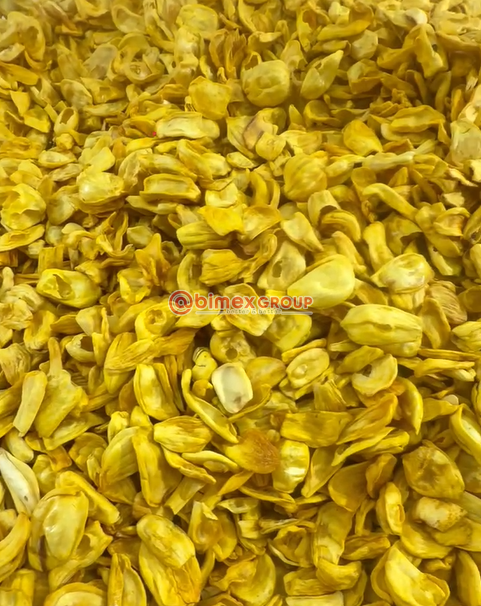
Table of Contents
ToggleBulk Jackfruit Chips can serve different commercial channels, including supermarkets, convenience stores, specialty shops, food-service businesses, online retailers, and private-label brands. Their tropical identity helps buyers introduce variety into dried fruit and snack categories that may already contain familiar products such as mango, pineapple, coconut, and banana.
Buying in bulk can provide greater flexibility for businesses that have their own repacking facilities or work with local packaging partners. Instead of purchasing a finished retail product, buyers can select packaging sizes, label languages, brand designs, and product positioning according to the needs of their market.
Bulk purchasing may also help distributors consolidate larger volumes for delivery to wholesalers, retailers, or food-service customers. However, buyers should calculate the complete landed cost rather than evaluating only the price per kilogram. Freight, import duties, local transportation, repacking, storage, quality inspection, and product losses can all affect the final commercial result.
For distributors, Bulk Jackfruit Chips can be supplied to multiple types of customers. Some may require larger food-service packs, while others may want smaller retail-ready portions. This allows distributors to create different product formats from one imported shipment.
Common commercial applications include:
Food retailers can position jackfruit chips in several areas of a store, depending on their customer base. They may be placed in the dried fruit section, the snack aisle, an international food area, or a premium tropical product display.
Retail positioning should reflect the actual product formulation and processing method. Buyers should avoid unsupported claims about health, nutrition, or sustainability. Product labels and promotional materials must accurately describe the ingredients, processing method, serving information, and other details required by the destination market.
Many crispy jackfruit products are produced using vacuum-frying technology. This processing method operates under reduced pressure and can help create a crisp texture while maintaining the fruit’s characteristic color and flavor.
Nevertheless, processing conditions can vary among manufacturers. Buyers should not assume that all vacuum-fried products will have the same texture, oil content, color, or sensory profile. Raw material quality, fruit maturity, slice thickness, frying conditions, oil management, and post-processing procedures can all influence the finished product.
Before ordering Bulk Jackfruit Chips, importers should request samples and evaluate them according to clearly defined criteria. A useful sample assessment may cover:
The approved sample should be supported by a written product specification. Relying only on photographs or informal descriptions can create disagreements when the commercial shipment arrives.
Quality consistency is especially important when a product will be distributed across several retail locations or repacked under a buyer’s own brand. Variations in color, texture, piece size, or flavor may affect consumer experience and brand perception.
When evaluating Bulk Jackfruit Chips, buyers should discuss acceptable tolerances with the supplier. Jackfruit is an agricultural product, so a reasonable level of natural variation may occur. Specifications that are too broad can result in inconsistent shipments, while excessively strict requirements may increase sorting losses, production costs, and lead times.
Important points to clarify include:
Fruit maturity can affect sweetness, aroma, color, and final texture. The supplier should have appropriate procedures for selecting and inspecting raw jackfruit before processing.
Some breakage can occur during processing, packing, and transportation. Buyers should establish an acceptable percentage of broken pieces, particularly when appearance is important for transparent retail packaging.
The product should deliver the agreed level of crispness without appearing excessively oily. Importers may ask the supplier about production controls, oil management, and finished-product inspection.
Requirements differ by country and customer. Buyers should confirm which certificates, test reports, ingredient documents, allergen statements, and export documents are required before placing an order. Certificates should be checked for their actual scope and validity rather than treated as general marketing claims.
Proper packaging protects the product against moisture, oxygen, contamination, physical pressure, and environmental changes during international transportation. Because crispness is a key product characteristic, packaging performance is an important sourcing consideration.
Buyers importing for local repacking should discuss the inner packaging material, net weight per carton, sealing method, carton strength, and storage requirements. The package should provide suitable protection throughout production, container loading, ocean or air transportation, customs clearance, warehousing, and local distribution.
For retail-ready projects, additional decisions may include:
A transparent window may improve shelf presentation, but it must be evaluated together with product protection and storage conditions. Attractive packaging is valuable only when it also preserves the quality of the product.
Importers should plan purchasing schedules around expected demand, production lead time, packaging preparation, and international transit time. Custom packaging may require additional time for artwork approval, printing, and material preparation.
Seasonal agricultural supply can also influence raw material availability and pricing. Buyers who provide realistic forecasts give suppliers more time to prepare materials and organize production. However, forecasts should not be confused with confirmed orders. Both parties should clearly distinguish between projected demand, reserved capacity, and confirmed purchasing commitments.
A trial order may help buyers assess market response before expanding distribution. Still, very small orders may not reflect the pricing or production efficiency available for regular commercial volumes. Buyers should discuss minimum order requirements and the possibility of mixed-product shipments when appropriate.
A suitable supplier should provide clear answers about product specifications, ingredients, packaging, testing, lead times, and export documentation. When sourcing Bulk Jackfruit Chips, distributors should look beyond the initial quotation and assess the supplier’s ability to maintain consistency across repeat shipments.
Useful questions include:
Clear communication at the beginning of the sourcing process can reduce misunderstandings and create more measurable expectations for both sides.
Bulk Jackfruit Chips can help distributors, food retailers, and private-label brands introduce a distinctive Vietnamese tropical snack to their markets. The strongest results come from combining suitable product quality with realistic specifications, protective packaging, compliant documentation, and reliable supply planning.
Abimex Group supplies Vietnamese crispy dried jackfruit for international B2B customers. We support buyers with product information, sample evaluation, bulk packaging, export documentation, and discussions regarding OEM or private-label requirements.
Contact Abimex Group to request product specifications, discuss packaging options, or arrange samples for your market evaluation.